What to know about the fragrances in your household cleaners
Discover the truth about fragrances in household cleaners and why that "fresh" scent might be doing more harm than good. Learn about the health risks of synthetic fragrances, their environmental impact, and how marketing has convinced us that clean has a smell—when it actually doesn't.
If you've ever walked down the cleaning aisle at your local grocery store, you've likely been hit with an overwhelming wall of scent. Ocean breeze. Mountain fresh. Lavender fields. Spring rain. The options seem endless, and the marketing promises are enticing: these fragrances will make your home smell clean, feel fresh, and be more inviting.
That "fresh linen" scent wafting through your home after you've wiped down the counters? It's not cleanliness you're smelling — it's a complex cocktail of synthetic chemicals that could be affecting your health and the environment in ways you never imagined.
As we become increasingly conscious about what we bring into our homes, it's time to take a closer look at the fragrances lurking in our household cleaners and why they might be doing more harm than good.
What does clean actually smell like?
Let's start with a fundamental truth: cleanliness is odourless.
When you properly clean a surface (removing dirt, bacteria, grease, and grime) what you're left with is simply the natural scent of that material. A truly clean countertop smells like... nothing. A properly cleaned bathroom smells neutral. Freshly mopped floors shouldn't announce themselves from across the house.
The association between "clean" and "scented" is entirely manufactured. It's a marketing construct that's been so thoroughly embedded in our culture over the past several decades that we've collectively forgotten this basic reality. Think about it: before the mid-20th century and the explosion of synthetic chemistry in consumer products, people cleaned their homes with simple ingredients like vinegar, baking soda, and soap. These products cleaned effectively, without lingering artificial scents.
The equation of fragrance with cleanliness is so powerful that many of us feel like we haven't actually cleaned unless we can smell that telltale scent afterwards. We've been conditioned to believe that if it doesn't smell "fresh," it isn't truly clean. This perception is precisely what cleaning product manufacturers have spent billions of dollars cultivating.
The marketing machine behind scented cleaners
The fragrance industry and household cleaning product manufacturers have executed one of the most successful marketing campaigns in modern history. They've convinced millions of consumers that scent equals cleanliness, and they've done it so effectively that many of us don't even question the assumption.
Walk through any cleaning product advertisement, and you'll notice the patterns. Flowing curtains billowing in an ocean breeze. Sun-drenched meadows. Crisp mountain air. These are carefully crafted narratives designed to tap into our emotions and our desire for a fresh, healthy home environment.
The marketing language is equally calculated. Products promise to "eliminate odours," "refresh your home," and "bring the outdoors in." They use words like "pure," "natural," and "fresh" even when the ingredients are entirely synthetic. The labels feature images of lavender, lemons, and pine trees, creating a visual association with nature that the actual product formulation doesn't support.
Here in Toronto, where many of us live in condos or homes without immediate access to outdoor spaces, these marketing messages can be particularly appealing. The promise of bringing that "cottage country pine" or "ocean breeze" into our urban dwellings taps into our desire for connection with nature. But what we're actually bringing into our homes is far from natural.
Companies also leverage our trust in cleanliness as a form of care. The advertisements often feature families, children playing on freshly cleaned floors, and parents who want the best for their loved ones. The subtext is clear: if you care about your family, you'll choose products that make your home smell this particular way. It's a powerful emotional appeal that has little to do with actual cleaning efficacy.
What's particularly insidious about this marketing is that it's self-reinforcing. Once consumers are conditioned to associate scent with clean, they'll actually doubt whether their home is clean if it doesn't smell a certain way. This creates a cycle where people feel compelled to continue buying scented products, even if they're experiencing negative health effects, because the alternative feels like accepting a "less clean" home.
What's actually in those fragrances?
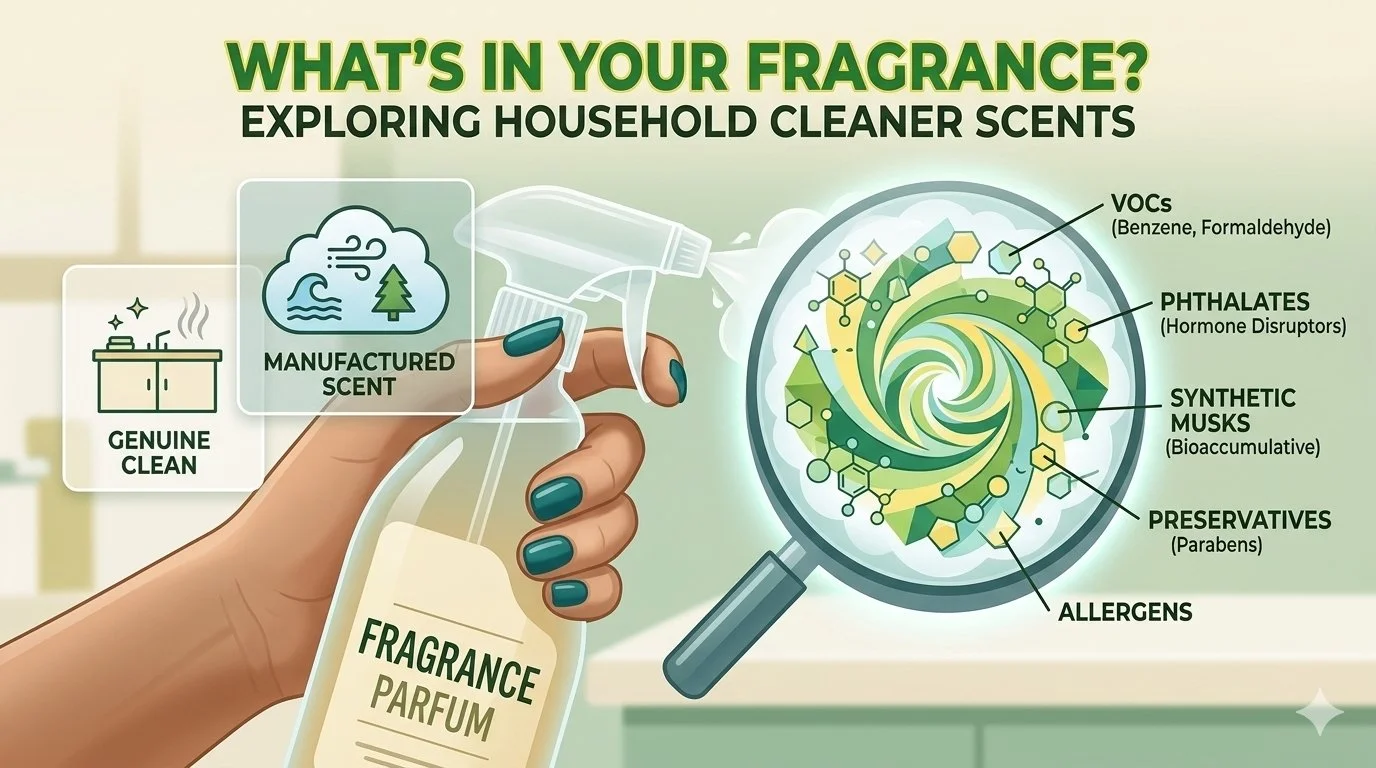
When you see "fragrance" or "parfum" listed on a cleaning product label, you might assume it's a single ingredient. In reality, that one word can represent a mixture of dozens or even hundreds of different chemicals, many of which you'll never know about.
This is where things get particularly concerning for Canadian consumers. While we have regulations through Health Canada regarding product safety, current labelling laws don't require manufacturers to disclose the specific components of their fragrance blends. These formulations are protected as "trade secrets," which means companies can include a wide range of synthetic chemicals without listing them individually on the label.
So what exactly goes into these mystery mixtures? Research has identified thousands of different chemicals used in fragrance formulations, but some of the most common categories include:
Phthalates are frequently used to make scents last longer. These chemicals have been linked to hormone disruption, reproductive issues, and developmental problems in children. Despite growing concerns, they're still widely used in many household products available on Toronto store shelves.
Synthetic musks are another common ingredient, designed to add depth and longevity to fragrances. Studies have found these compounds in human blood, breast milk, and body fat, raising concerns about bioaccumulation and long-term health effects.
Volatile organic compounds (VOCs) are chemicals that easily evaporate into the air. Many fragrance ingredients fall into this category, including substances like benzene, formaldehyde, and toluene—all of which have known health risks. When you spray that scented cleaner, you're releasing these VOCs into your indoor air, where they can linger for hours or even days.
Preservatives like parabens are often added to fragrance mixtures to prevent bacterial growth. However, parabens are endocrine disruptors that can mimic estrogen in the body and have been found in breast cancer tumours, though the connection remains under investigation.
Allergens are abundant in synthetic fragrances. The International Fragrance Association has identified 26 known fragrance allergens, but cleaning products can contain these without specific disclosure on Canadian labels. For Toronto residents dealing with allergies or sensitivities, this lack of transparency makes it nearly impossible to avoid problematic ingredients.
What makes this particularly troubling is that many of these chemicals haven't been thoroughly tested for safety, especially in combination with one another. While individual compounds might be present in small amounts, we're exposed to multiple fragranced products throughout the day—cleaners, laundry detergents, air fresheners, personal care products—and the cumulative effect of this chemical exposure is largely unknown.
The European Union has banned all CMR (Carcinogenic, Mutagenic, Reprotoxic) chemicals in personal care and household products, many of them fragrance ingredients. In Canada, our regulations are significantly less stringent, meaning products on our shelves may contain substances that aren't allowed in other developed countries.
Health risks associated with synthetic fragrances
The health implications of regular exposure to synthetic fragrances in household cleaners are more significant than many homeowners realize. While the cleaning product industry maintains that their formulations are safe, a growing body of research suggests otherwise.
Respiratory issues are among the most commonly reported problems. When you spray a scented cleaner, you're creating an aerosol of chemical compounds that you then inhale. For people with asthma, this can trigger attacks. One study found that individuals with asthma reported cleaning products as one of their top triggers. Even for those without pre-existing conditions, regular exposure to scented cleaners has been associated with the development of adult-onset asthma, particularly among professional cleaners and people who use these products frequently.
The impact on indoor air quality is substantial. Toronto homes, especially during our cold winters when windows stay closed for months, can develop particularly poor air quality when scented cleaners are used regularly. Research has shown that using household cleaning products can release as many volatile organic compounds into the air as driving a car—a startling comparison that highlights just how much these products affect the air we breathe in our homes.
Headaches and migraines are frequently triggered by synthetic fragrances. Many people report that exposure to scented cleaners leads to headaches, dizziness, or nausea. For those with chemical sensitivities or fragrance sensitivities, the effects can be debilitating, making it difficult to be in spaces where these products have been recently used.
Skin irritation and allergic reactions are also common. Contact with scented cleaning products can cause rashes, itching, and dermatitis. Because fragrances can contain dozens of potential allergens, identifying the specific cause of a reaction can be extremely difficult, leaving sufferers struggling to find products that won't irritate their skin.
The hormone disruption caused by many fragrance chemicals is particularly concerning for families with children. Endocrine-disrupting chemicals can interfere with normal hormone function, potentially affecting development, reproduction, and metabolism. While the full extent of these effects is still being studied, the precautionary principle suggests we should be cautious about regular exposure, especially for vulnerable populations like pregnant women and young children.
Neurological symptoms have also been reported. Some fragrance chemicals can cross the blood-brain barrier, and studies have linked exposure to issues with cognitive function, mood changes, and even neurodevelopmental problems in children exposed during critical developmental windows.
For Toronto residents living in multi-unit buildings, there's an additional concern: you may be exposed to your neighbours' cleaning products through shared ventilation systems. This means even if you choose fragrance-free products for your own home, you might still be breathing in chemicals from products used elsewhere in your building.
Perhaps most troubling is the emerging research on long-term health effects. Because many of these chemicals accumulate in the body over time and we're exposed to them chronically throughout our lives, researchers are only beginning to understand the potential long-term consequences. Some studies have suggested links between regular use of scented cleaning products and increased risks of certain cancers, though more research is needed to establish definitive causal relationships.
Environmental impact of fragranced cleaning products
The effects of fragranced household cleaners extend far beyond the walls of your home. These products have significant environmental implications that impact our local waterways, wildlife, and broader ecosystem.
When you pour scented cleaning products down your drain, those chemicals don't simply disappear. They enter the wastewater system and eventually make their way to water treatment facilities. While these facilities are designed to remove many contaminants, they weren't built to handle the complex cocktail of synthetic fragrance chemicals we're now sending through them regularly. Many of these compounds pass through the treatment process largely unchanged.
Once in the aquatic environment, these substances can have serious effects on fish and other wildlife. Studies have shown that synthetic musk compounds — common in fragranced products — accumulate in fish tissue and can affect their reproduction and development. These chemicals have been detected in fish in the Great Lakes, demonstrating that our consumer choices are directly impacting our local ecosystem.
Phthalates and other fragrance ingredients are also problematic for aquatic life. Research has shown these chemicals can act as endocrine disruptors in fish, amphibians, and other aquatic organisms, potentially affecting entire populations. When these chemicals enter the food chain, they can accumulate at higher concentrations as you move up trophic levels, ultimately affecting the birds and mammals (including humans) who consume fish.
The production of synthetic fragrances also has environmental costs. Manufacturing these chemicals requires petroleum-based ingredients and energy-intensive processes. The carbon footprint of producing, packaging, and transporting these products contributes to climate change — an issue that Toronto and all Canadian cities are grappling with as we work toward our emissions reduction targets.
Air pollution is another concern. The volatile organic compounds released when you use scented cleaners don't just affect your indoor air quality, they also contribute to outdoor air pollution. Once these VOCs are released into the atmosphere, they can react with other pollutants to form ground-level ozone and particulate matter, both of which are harmful to human health and the environment. In a city like Toronto, where air quality is already challenged by vehicle emissions and industrial activity, adding to the VOC load through unnecessary fragrance chemicals seems particularly unwise.
The packaging of scented cleaning products adds another environmental burden. Most of these products come in plastic bottles, contributing to the enormous amount of plastic waste our society generates. While Toronto has recycling programs, the reality is that much plastic isn't recycled and ends up in landfills or, worse, in our waterways and natural spaces.
There's also the issue of persistence. Many synthetic fragrance chemicals are designed to last, that's why your cleaning product promises "long-lasting freshness." But this persistence means these chemicals stick around in the environment for extended periods, accumulating in sediments, soils, and living organisms. We're creating a legacy of chemical contamination that will affect our local environment for years to come.
In order to protect our natural spaces, ravines, parks, and waterfront — understanding this connection between our cleaning product choices and environmental health is crucial. Every time we choose a heavily fragranced cleaner, we're contributing to the chemical burden on our local ecosystem.
Making the switch to fragrance-free cleaning
The good news is that you don't need synthetic fragrances to have a genuinely clean home. Making the transition to fragrance-free cleaning is easier than you might think, and many people who've made the switch report feeling better and noticing improvements in their health.
Start by reading labels carefully. In Canada, look for products labeled "fragrance-free" rather than "unscented." These terms aren't identical — unscented products may still contain fragrance chemicals used to mask the smell of other ingredients, whereas fragrance-free means no fragrance chemicals have been added at all. Certified products with eco-labels like EcoLogo or Green Seal have been independently verified to meet specific environmental and health standards.
Simple, effective alternatives are readily available at stores or can be made at home. White vinegar is an excellent all-purpose cleaner that kills many types of bacteria. Mixed with water, it's perfect for cleaning countertops, windows, and floors. Yes, it smells while wet, but that scent dissipates quickly, leaving no residual odour.
Baking soda is another powerhouse cleaner. It's mildly abrasive, making it great for scrubbing, and it naturally neutralizes odours rather than masking them with synthetic scents. You can use it on just about everything — from kitchen sinks to bathtubs.
Castile soap, available at many health food stores and some mainstream retailers, is a versatile plant-based soap that cleans effectively without synthetic additives. It can be diluted for various cleaning tasks around your home.
For those who miss having some scent but want to avoid synthetic fragrances, there are safer options. A few drops of pure essential oils can be added to homemade cleaners — but use them sparingly and choose high-quality, pure oils. Be aware that many essential oils are toxic to pets, can cause sensitivities in some people, and they're not necessary for cleaning effectiveness. If you do use them, less is more.
When shopping for commercial cleaning products, look for brands that prioritize transparency. Some companies now list all their ingredients, including fragrance components, on their labels or websites. These brands recognize that consumers have a right to know what they're bringing into their homes.
The transition period might feel strange at first. You've likely spent years associating an artificial scent with cleanliness, so a home that simply smells neutral may initially feel less clean to you. Give yourself time to adjust. Within a few weeks, most people find that they prefer the absence of synthetic scents and become more sensitive to them when encountering scented products elsewhere.
If you live in a condo or apartment with shared laundry facilities, consider requesting that your building switch to fragrance-free cleaning products in common areas. Many buildings are becoming more aware of chemical sensitivities and are willing to make changes when residents voice their concerns.
What about "natural" and "green" fragrances?
As awareness of synthetic fragrance issues grows, many cleaning product manufacturers have responded by marketing their products as "natural," "plant-based," or "green." While this might sound reassuring, it's important to approach these claims with a critical eye.
The term "natural" is largely unregulated in Canada when it comes to cleaning products. A product can be marketed as natural even if it contains predominantly synthetic ingredients, as long as some component is derived from natural sources. This greenwashing is rampant in the cleaning product industry, and consumers need to be aware that marketing claims don't always reflect reality.
Some products advertise "naturally derived fragrances" or "essential oil blends." While these are indeed different from purely synthetic fragrances, they're not necessarily safer or better for everyone. Natural fragrances can still contain allergens and irritants. Essential oils are highly concentrated plant compounds, and some can cause skin sensitization, respiratory issues, or other adverse reactions. They can also pose a risk to any pets in your home. The fact that something comes from a plant doesn't automatically make it safe for everyone.
Additionally, some "natural" fragrances are produced using processes that are far from environmentally friendly. The essential oil industry has its own set of environmental and ethical concerns, from unsustainable harvesting practices to the enormous amount of plant material required to produce small quantities of oil.
Products labeled "green" or "eco-friendly" may be better in some ways—perhaps they're biodegradable or come in recycled packaging—but they can still contain problematic fragrance ingredients. These environmental claims don't necessarily address health concerns related to fragrance chemicals.
The key is to look beyond marketing buzzwords and examine the actual ingredient list. If a product lists "natural fragrance" or "parfum" without disclosing what that fragrance consists of, you're still dealing with a lack of transparency that makes it impossible to make an informed decision about potential health effects.
For people with chemical sensitivities, fragrance allergies, or respiratory conditions, even "natural" fragrances can be problematic. The safest choice is still fragrance-free products, regardless of whether the fragrance would be natural or synthetic.
This doesn't mean all products marketed as green or natural are deceptive—many genuinely are better choices. But it does mean you need to do your homework, read labels carefully, and perhaps research brands before purchasing. Look for third-party certifications, complete ingredient disclosure, and a company track record of transparency.
Creating a healthier home environment
Beyond switching to fragrance-free cleaners, there are several other steps homeowners and tenants can take to create a healthier indoor environment.
Improve ventilation whenever possible. Even during Toronto's cold winters, opening windows for brief periods can significantly improve indoor air quality. If you live in a newer, tightly sealed home or condo, consider using your exhaust fans regularly, particularly when cleaning.
Consider an air purifier with a HEPA filter and activated carbon, which can help remove airborne particles and some chemical compounds. This can be particularly useful for residents living in high-traffic areas or near major roadways where outdoor air quality might also be a concern.
Reduce the number of scented products in your home overall. It's not just cleaners—air fresheners, scented candles, plug-in fragrances, and even some personal care products all contribute to your total chemical exposure. Creating a low-fragrance home environment can make a noticeable difference in how you feel.
Be mindful of what you're bringing into your space. When possible, choose furniture, mattresses, and other home goods that are made without added fragrances or harmful chemicals. That "new furniture smell" is actually off-gassing of chemicals—not something you want to be breathing in your home.
If you're sensitive to fragrances, don't hesitate to advocate for yourself. This might mean requesting that visitors to your home avoid wearing heavily scented products, or asking your workplace to consider fragrance-free policies. Toronto is becoming increasingly aware of these issues, and many public spaces and workplaces are implementing scent-free policies.
Educate your family members, roommates, or household members about why you're making these changes. When everyone understands the reasoning behind choosing fragrance-free products, they're more likely to support and maintain these healthier practices.
The bottom line: You deserve transparency
At the heart of the fragrance issue is a fundamental question of transparency and consumer rights. You have the right to know what chemicals you're bringing into your home and exposing your family to. The current system, where hundreds of potentially harmful ingredients can be hidden under the single word "fragrance," is simply not acceptable.
As we become more health-conscious and environmentally aware, we're seeing increased demand for product transparency. This consumer pressure is slowly beginning to change the market. Some companies are now voluntarily disclosing their fragrance ingredients, recognizing that transparency builds trust with customers.
But we shouldn't have to rely on voluntary corporate goodwill. Stronger regulations requiring full ingredient disclosure for all household products would give Canadian consumers the information they need to make informed choices about their health and their environment.
Until those regulations exist, voting with your wallet remains one of your most powerful tools. By choosing fragrance-free products and supporting companies that prioritize transparency and safety, you're sending a clear message to the industry that these values matter to consumers.
Remember: a truly clean home doesn't need to smell like anything. That neutral, fresh scent of genuinely clean spaces is far healthier and more honest than any synthetic fragrance trying to convince you otherwise. When you eliminate unnecessary fragrances from your cleaning routine, you're not sacrificing cleanliness — you're actually creating a healthier, safer environment for yourself and your family.
Your home should be your sanctuary, a place where you can breathe easily and feel safe. By understanding the truth about fragrances in household cleaners and making informed choices, you're taking an important step toward creating the healthy home environment you deserve.
As the founder of EcoEthical Cleaning, I've built my practice around everything you just read — and fragrance-free cleaning is only the beginning. Every ethically-sourced product I bring into your home is made from natural ingredients, and chosen with your family's health in mind. If you're ready to reclaim some time without compromising on what goes into your air and onto your surfaces, I'd love to help. Reach out today for a free, no-obligation estimate. Proudly serving Toronto’s Harbourfront District and surrounding neighbourhoods.