Sustainable, eco-friendly products
Safe for your home and our planet
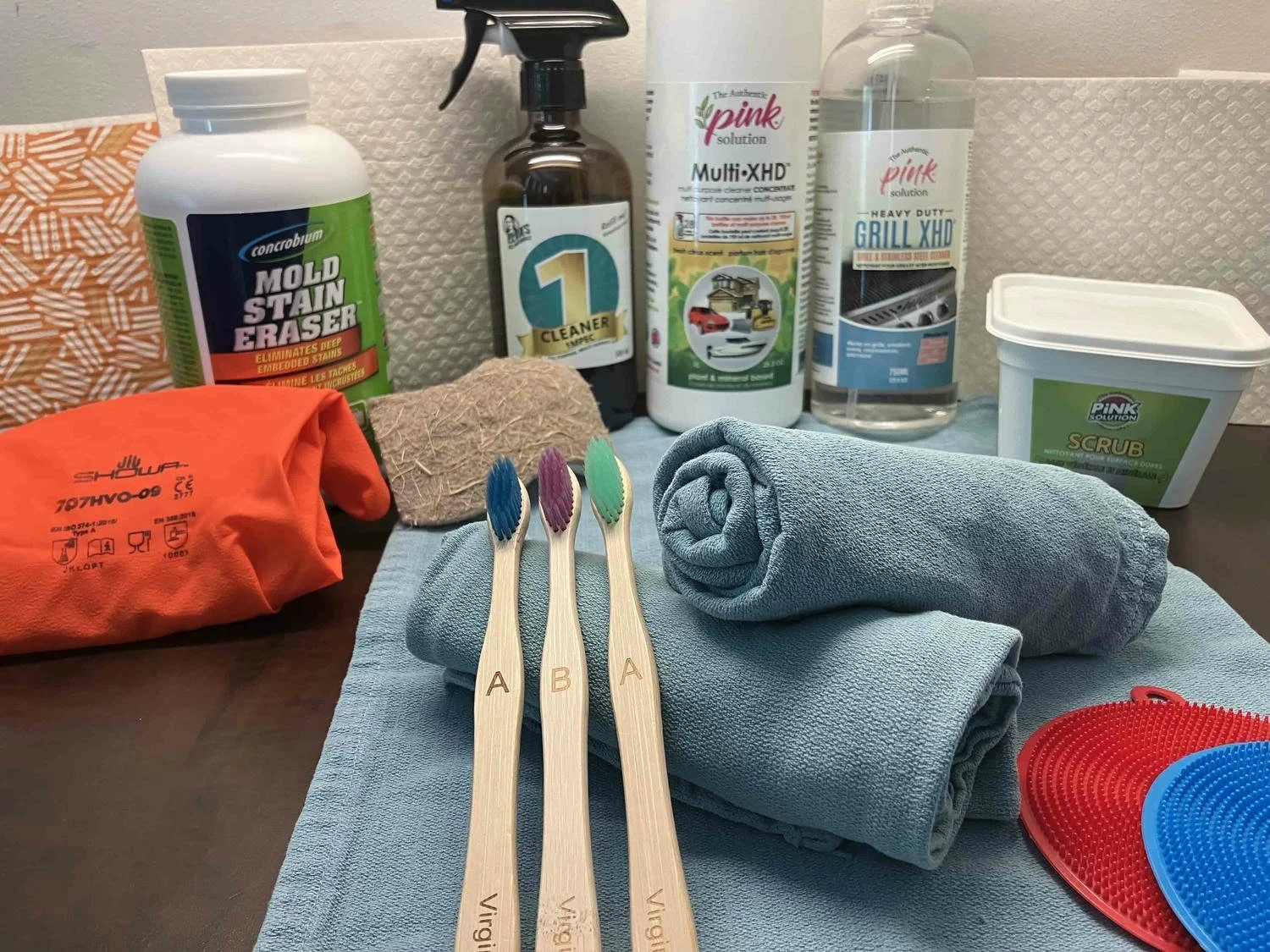
I believe a clean home shouldn't come at the expense of your health or the environment. That's why the products I use are:
Plant-based and biodegradable
Free from harsh fumes and toxins
Safe around children and pets
Made in Canada whenever possible
The cloths and scrubbers I use are made from natural fibres—not synthetic microfibre that sheds microplastics into our waterways.
I bring all of the supplies I’ll need to every service—you don't need to provide anything.
Primary products
-
What it does:
This multi-surface cleaner handles everything from greasy kitchen buildup to mineral deposits from tap water. Its versatility means I can clean more areas of your home effectively and efficiently—without switching between multiple products.
How it works:
This cleaner works by softening hard water in two ways. Soda ash binds to dissolved minerals, while a chelating agent neutralizes them—creating ideal cleaning conditions. With the minerals out of the way, the surfactant (lauramine oxide) can do its job: reducing water’s surface tension so dirt and grease can be lifted and rinsed away.
Used on:
chrome
ceramic
glass
hardwood or laminate flooring
porcelain
painted walls
stainless steel
treated wood
For full product details, please visit the manufacturer’s website.
-
What it does:
Cleans tough baked-on grease and residue found in ovens, stovetops, and BBQs.
How it works:
Like the all-purpose cleaner, it softens hard water using a chelating agent, allowing its bio-based surfactant and eco-friendly solvent (vegetable methyl ester) to work together. This combination breaks down tough grease and carbonized buildup without harsh chemicals.
Used on:
glass
grills
oven interiors
stainless steel
For full product details, visit the manufacturer’s website.
-
What it does:
Removes difficult stains on hard surfaces.
How it works:
It uses soda ash to soften the water and enhance cleaning power. Two surfactants—vegetable soap and sodium laurel ether sulfate—work together to lift dirt and grime, while finely ground pumice provides the abrasion needed for stubborn stains.
Used on:
grout
toilet bowls
For full product details, visit the manufacturer’s website.
-
What it does:
Cleans delicate surfaces that could be damaged by acidic or alkaline products.
How it works:
It uses sodium chloride to balance the water’s chemistry, allowing the surfactants—soapwort herb extract and decyl glucoside—to work together to loosen, suspend, and remove dirt and residue.
Used on:
All natural stone surfaces (including marble, quartz, travertine)
For full product details, visit the manufacturer’s website.
-
What it does:
Eliminates messes caused by organic residues—such as pet accidents, food spills, and drink stains.
How it works:
This product uses a blend of enzymes derived from naturally occurring microbes to break down and digest organic matter, neutralizing odours at the source rather than masking them.
Used on:
carpets
mattresses
pet beds
upholstery
For full product details, visit the manufacturer’s website.
-
What it does:
Eliminates surface mould and the stains it leaves behind, without any volatile organic compounds (VOCs).
How it works:
As it dries, the product forms an invisible barrier that physically destroys mould at the root and helps prevent new growth on treated surfaces.
Used on:
Moisture-prone areas such as ceilings, walls, window sills, appliances, sinks, and toilets—anywhere mould or mildew is likely to develop.
For full product details, visit the manufacturer’s website.
-
What it does:
Provides a residue-free, true-neutral pH clean for extremely delicate surfaces and serves as a high-purity diluent for concentrated cleaning products.
How it works:
Ensures that no unwanted chemical reactions take place—which increases cleaning product effectiveness and the lifespan of delicate surfaces.
Used on:
Any surface that is prone to damage from acidic or basic cleaning products—regardless of their dilution.
Secondary products
I keep these on hand for specific cleaning challenges.
-
What it does:
Assists in removing dye-based stains (markers, food colouring, etc.).
How it works:
This product acts as a solvent—loosening the bonds that cause dyes to cling to a surface—then loosening the dye from the surface so it can be blotted away with a cloth.
Used on:
ceramic or porcelain tile
cotton, linen and other durable natural fibres
glass
microfibre, nylon, or polyester synthetic fibres
sealed stone
stainless steel
More information on this product can be found here
-
What it does:
Assists in removing alkaline-based deposits such as calcium, limescale, rust.
How it works:
The acetic acid in vinegar reacts with alkaline deposits like calcium or rust to create a water soluble salt that can be rinsed away.
Used on:
ceramic and porcelain
glass
stainless steel
More information on this product can be found here
-
What it does:
Adds soft abrasion and deodorizing on delicate surfaces.
How it works:
Baking soda acts as a soft abrasive. As an alkaline, it’s able to neutralize both acidic odour-causing molecules as a powder and fatty acids found in kitchen grease when combined with water to form a paste.
Used on:
ceramic and porcelain
chrome
glass
plastic
stainless steel
More information on this product can be found here
-
What it does:
Assists in removing stains caused by organic compounds
How it works:
By using a process known as oxidation, it breaks down the chemical bonds of organic matter, making it easier for the matter to be wiped from a surface.
Used on:
white tile grout
More information on this product can be found here
-
What it does:
Dissolves Adhesives: Gently lifts tape and sticker residue without the use of harsh solvents.
Restorative Polish: Adds a natural, protective finish to leather, wood, and stainless steel, making future maintenance faster and more efficient.
How it works:
Smart Solubility: Through a process called solubility, the wax esters in jojoba oil break down the sticky polymers found in adhesives, neutralizing the bond without damaging the finish underneath.
Biomimetic Conditioning: Because it is chemically similar to the natural oils found in skin and hides, jojoba is the ideal conditioner for leather—restoring flexibility and preventing cracks.
Residue-Free Shine: Unlike traditional oils, it does not oxidize (go rancid) or leave a sticky, dirt-attracting film, making it a superior polish for wood furniture.
Surface Leveling: It is a sustainable way to polish stainless steel by filling the metal’s microscopic brush marks, creating a smooth barrier that allows future spills and fingerprints to be wiped away with ease.
Used on:
Tape and other adhesive residue
Leather furniture and accessories
Finished wood furniture
Stainless steel appliances
Cleaning supplies
-
Ultra-absorbent, lint-free towels made from reclaimed cotton. Machine-washable and durable, they don't shed microplastics like synthetic microfibre cloths.
-
Reusable, biodegradable, and incredibly absorbent. Made from cotton and natural wood cellulose, these cloths are perfect for spills and cleaning in kitchens and bathrooms.
-
Made from wood pulp, coconut husk, and cotton, these sponges are fully biodegradable. Highly absorbent and durable, they’re perfect for surfaces that require gentle scrubbing.
-
Made from renewable, biodegradable, and compostable materials, these brushes are a planet-friendly choice. The durable bamboo handles are strong yet lightweight, while the coconut fibre and sisal bristles provide excellent scrubbing power for the toughest messes.
-
These reusable dusters use natural wool fibres to provide electrostatic dusting power that traps and holds dust particles. Crafted from renewable materials, they’re a sustainable alternative to disposable dusters.
Frequently asked questions
-
Distilled water is a high-purity diluent with a neutral pH. It ensures no unwanted chemical reactions occur and no residue remains after cleaning. Using distilled water ensures I get the best performance out of my products while protecting every surface of your home.
-
Unlike traditional scents that mask smells, enzymes derived from naturally occurring microbes physically break down and digest organic matter, neutralizing odours at the molecular source.
-
Synthetic microfibre cloths shed tiny microplastics into the water system during every wash. Natural fibres like cotton, coconut husk, and wood cellulose are biodegradable and do not contribute to microplastic pollution.
Want to learn more?
Have questions about specific products or ingredients? Contact me—I'm happy to provide detailed information about anything I use.