

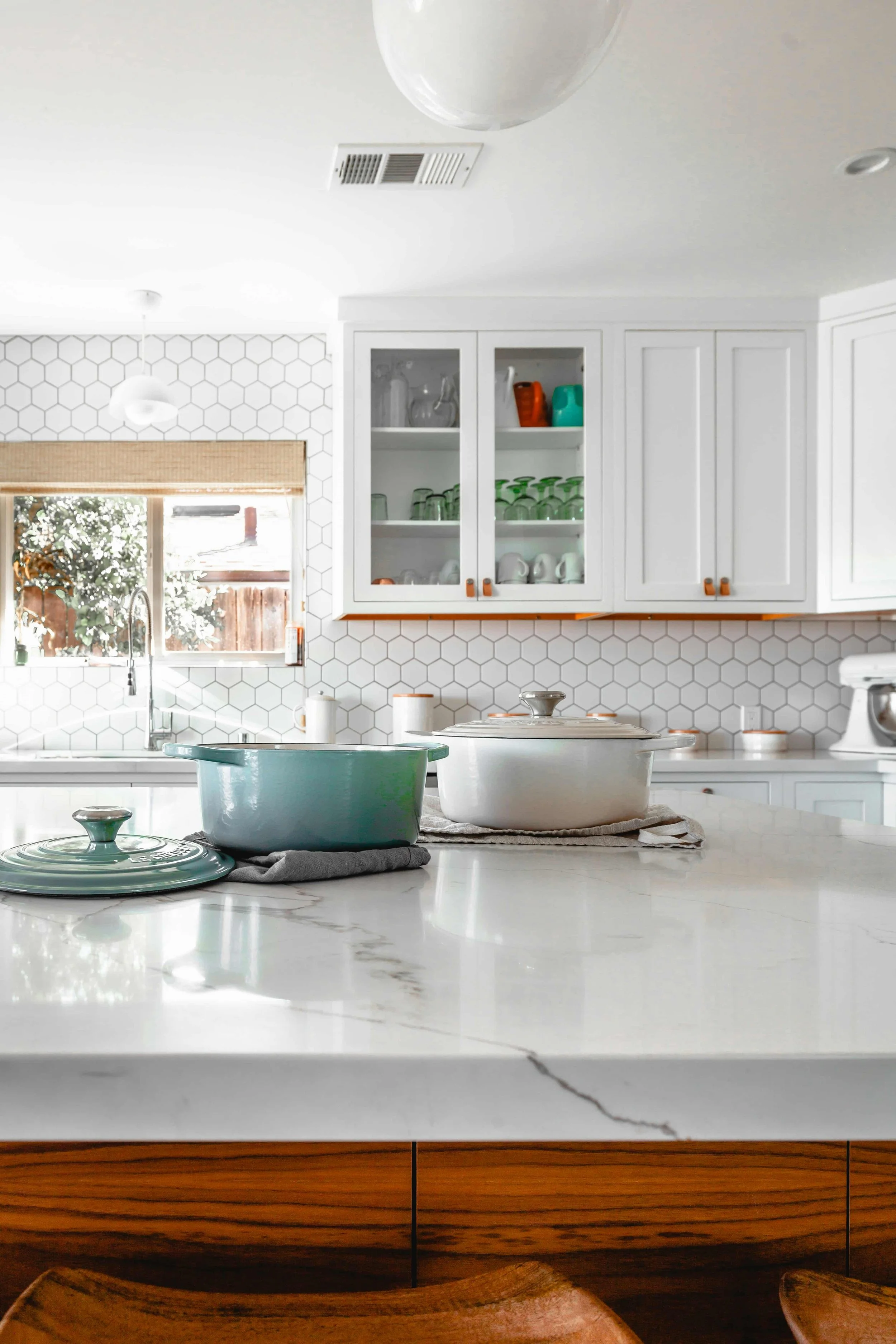
How to sustainably clean marble, granite & other natural stone without causing damage
Photo by roam in color on Unsplash
Natural stone surfaces—marble, granite, limestone, travertine—are beautiful investments that can last for decades. But there’s one thing most homeowners don’t learn until after the damage is done: natural stone is far more delicate than it looks. Natural stone is reactive, porous, and extremely sensitive to acids.
This guide will teach you how to clean natural stone safely, naturally, and without causing permanent damage.
Eco-friendly natural stone care at a glance
Safe:
pH-neutral stone cleaner
Plain water
Grain alcohol (light use only)
Not safe:
Vinegar, lemon juice, citrus-based cleaners
Windex or ammonia-based cleaners
Bleach
Baking soda (as a scrub)
Scouring powders
Magic Erasers
Oven cleaners or heavy-duty degreasers
Key principle:
Natural stone + acids = permanent damage.
Most important habit:
Wipe any spills (wine, citrus, tomato sauce) within seconds, not minutes.
What never to use on natural stone
Many types of natural stone—especially marble, limestone, and travertine—are made of calcium carbonate, a mineral that dissolves in acid. Once dissolved (etched), the surface cannot be “cleaned back” to shine; only professional polishing can fix it.
Acidic cleaners
Vinegar
Permanently etches marble, limestone, and travertine
Creates dull, rough spots that cannot be buffed out
Damages granite sealants over time
Lemon juice and citrus-based cleaners
More acidic than vinegar
Etches marble and limestone instantly
Removes polished finishes and leaves rough, dull patches
Toilet bowl cleaners
Contain phosphoric or hydrochloric acid
Can destroy stone surfaces instantly
Keep these far from any stone countertop
Alkaline and high-pH cleaners
Ammonia-based products (Windex, glass cleaners)
Too alkaline for natural stone
Break down sealants
Dull the surface and cause discolouration
Bleach
High pH weakens sealant
Can discolour certain granites
Creates a dull, lifeless finish over time
Oven cleaners and heavy-duty degreasers
Extremely caustic
Strip sealant and polish
Can cause pitting, chipping, and permanent surface damage
Abrasive cleaners and tools
Scouring powders
Scratch polished stone
Remove shine permanently
Baking soda (when used as a scrub)
Mild abrasiveness scratches softer stones
Alkalinity affects sealants
Safe only as a sitting poultice, not a scrub
Melamine foam (Magic Erasers)
Act like micro-sandpaper
Strip away polish and sealant
Steel wool and abrasive scrubbing pads
Leave deep scratches and metal residue
Can cause rust stains on stone
Dangerous application methods
Steam cleaners
Too much heat and moisture
Can loosen sealant, cause staining, and damage grout
Pressure washers (indoor use)
Force can chip and pit stone
Strips away sealant instantly
Spray-and-leave products
Stone should never have liquid sit on the surface
Can cause staining and deep penetration
Understanding the differences between natural stones
Different types of stone react differently to acids, moisture, and abrasion.
Most sensitive
Marble
Etches almost instantly
Extremely delicate and reactive
Limestone
Very porous
Sensitive to both acids and staining
Travertine
Similar to limestone but more porous
Natural pits absorb stains easily
Moderately sensitive
Quartzite
Very hard and scratch-resistant
Still porous and requires sealing
Often mistaken for engineered quartz
Slate
Porous and stain-prone
Less reactive to acids than marble, but still sensitive
Most durable (but still sensitive)
Granite
More acid-resistant but not acid-proof
Sealant can be damaged by harsh cleaners
Varies in porosity depending on the slab
Onyx
Delicate, translucent, and expensive
Highly reactive—needs professional care
Soapstone
Acid-resistant and non-porous
Soft—scratches easily
Does not require sealing
Safe, effective natural stone cleaning
Understanding pH greatly simplifies stone care.
Daily cleaning: Plain water
Use warm water on a clean cloth.
Wring the cloth until barely damp.
Wipe the stone.
Dry immediately with a clean cloth.
Weekly cleaning: pH-neutral stone cleaner
Clear the surface.
Spray a small area lightly with pH-neutral cleaner.
Wipe gently with clean cloth.
Rinse with a separate damp cloth.
Dry thoroughly and buff to a shine.
Emergency stain removal
Despite best efforts, stains happen. Here's how to handle them safely:
Oil or water-based stains (grease, cooking oil, mineral deposits)
Use a baking soda poultice (not a scrub):
Mix baking soda + water into a thick paste
Apply ¼ inch thick
Cover with parchment paper
Leave 24–48 hours
Rinse and repeat if needed
Organic stains (coffee, tea, wine, food)
On dark stone, use a baking soda poultice
On light stone, use a hydrogen peroxide poultice:
Mix hydrogen peroxide with baking soda to form a paste
Apply ¼ inch thick
Cover and leave 24–48 hours
Ink stains
Use grain alcohol:
Test first on an inconspicuous area
Apply some alcohol to a cotton swab or cloth and dab only the area that’s stained
Rinse immediately
Reseal afterward, as the alcohol will likely compromise the stone’s sealer and leave the stone vulnerable to future staining.
Rust stains
Try a rust removal product designed specifically for natural stone.
Sealing natural stone
Natural stone is porous, which means it can absorb liquids, oils, and staining agents. Sealing creates a protective barrier that gives you time to wipe up spills before they penetrate the surface.
How sealing protects your stone:
Prevents staining from wine, coffee, oils, and acidic liquids
Reduces etching (though it won't completely prevent acid damage)
Makes cleaning easier by keeping dirt on the surface
Extends the life of your stone
Not all stone needs the same level of sealing:
Marble, limestone, travertine: Highly porous—seal every 6–12 months
Granite: Less porous—seal every 1–2 years
Some dense granites may rarely need sealing
The water drop test (test your seal frequently):
Place a few drops of water on your stone. If the water beads up, your seal is intact. If it darkens the stone within 5–10 minutes, it's time to reseal.
When to reseal:
Water no longer beads on the surface
Stone darkens when wet
Stains appear more easily
After professional cleaning or polishing
Professional maintenance:
Consider professional polishing every 3–5 years to:
Remove light scratches and etching
Restore shine
Refresh the protective seal
Address damage before it worsens
Always follow manufacturer guidelines when sealing stone yourself, or hire a professional for best results.
Signs of natural stone damage
Etching
Dull, rough spots
Doesn’t go away with cleaning
Staining
Darkened areas that appear to be “inside” the stone
Scratching
Visible scratches
Loss of polish or shine
When to call a professional
Professional help is recommended when:
Etching covers large areas
Stains don’t respond to poultices
Scratches, chips, or cracks are present
Polished stone has lost its shine
Common questions
Can I ever use vinegar on stone?
Only on soapstone. All other stones: never.
How do I know if my stone is sealed?
Drop water on the surface—if it beads, you’re good.
What’s the difference between etching and staining?
Etching = chemical surface damage
Staining = absorbed discolouration
Is marble too delicate for kitchens?
It depends on your expectations. It develops patina over time.
How often should I deep clean?
Weekly for kitchens, monthly for bathrooms.
Is baking soda safe for granite?
Only as a poultice, not a scrub.
The bottom line on natural stone care
Natural stone can last a lifetime—but only with gentle, pH-neutral care.
The rules are simple:
Water first
pH-neutral cleaner second
Avoid acids, abrasives, and harsh chemicals
The few seconds it takes to wipe spills or use the right cleaner can save you thousands in restoration costs down the road.
Professional and sustainable natural stone care in Toronto
I clean and maintain natural stone in Toronto using only pH-neutral, stone-safe products and proper low-moisture techniques.
What’s included:
pH-neutral cleaning
Safe techniques for porous stones
Honest assessment of existing damage
Recommendations for restoration if needed
Stone care isn’t about strong products—it’s about correct pH, proper technique, and preventing damage before it starts.
Want your natural stone to stay beautiful for decades?