
How to sustainably clean leather, without damaging
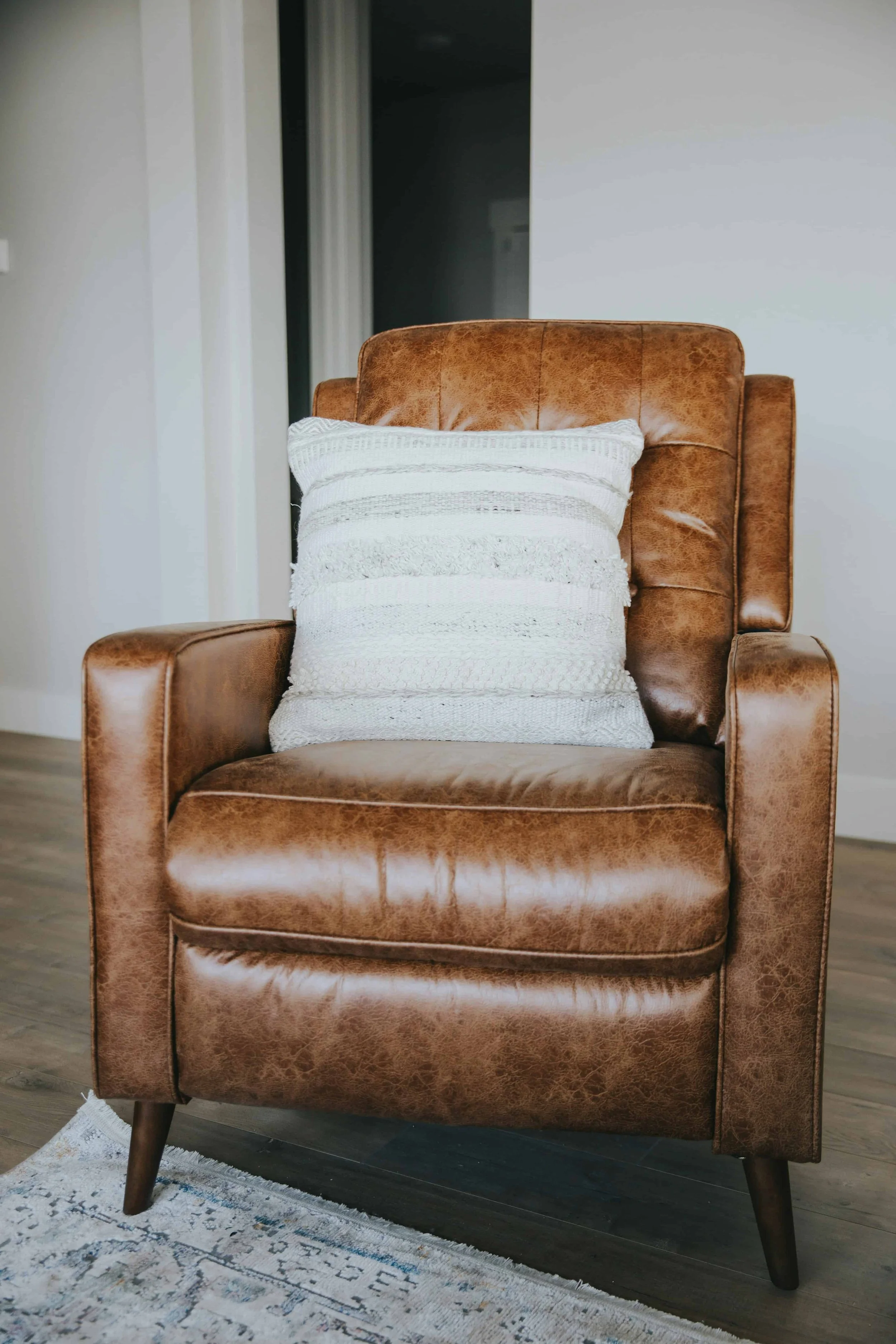
Photo by khloe arledge on Unsplash
Leather furniture is an investment—beautiful, durable, and meant to last decades. Like our own skin, leather needs gentle handling, minimal product, and regular conditioning— not aggressive cleaning routines. Most damaged leather I see wasn’t ruined by neglect, but by well-intentioned cleaning that stripped away protective oils and never replaced them.
With the right care, leather stays soft, supple, and strong for years. Continue reading to learn how to keep yours in excellent condition using safe, natural methods.
Eco-friendly leather care at a glance
Safe:
Distilled water
Diluted castile soap (1 part soap to 10 parts distilled water)
Leather balms and conditioners made with natural ingredients
Not safe:
Acidic cleaners
Ammonia
Bleach
Rubbing alcohol (except in emergencies)
Abrasive scrubs (including baking soda)
Key principle:
Less is more. Leather doesn’t need frequent cleaning—it needs moisture retention and protection.
Essential step:
Always condition after cleaning to replace natural oils.
What should never be used on leather
Leather is porous and organic. Its softness depends on natural oils and a protective finish. Harsh alkaline or acidic cleaners remove both, causing cracking, fading, stiffness, and irreversible damage.
Harsh chemicals and solvents
Bleach
Causes instant discolouration
Breaks down leather fibres
Leads to cracking and brittleness
A single use can cause permanent damage
Rubbing alcohol
Extremely drying
Removes finish and colour
Can stiffen leather like cardboard
Ammonia-based cleaners (e.g., glass cleaners)
Strip natural oils
Cause progressive drying
Fade dye, especially on dark leather
Damage builds with each use
Acetone (nail polish remover)
Dissolves protective finish on contact
Strips dye
Leaves immediate, visible damage
Natural cleaners that aren't safe for leather
Many common DIY methods are too acidic, too alkaline, or too abrasive.
Vinegar / Lemon juice
Far too acidic
Breaks down protective coatings
Causes dryness and cracking over time
Often looks fine at first—damage appears months later
Baking soda (as a scrub)
Abrasive texture scratches leather
Too alkaline for leather’s chemistry
Safe only as a dry oil absorber (no rubbing)
Essential oils
Can stain or soften the finish
Too concentrated for direct use
Many are unsafe for pets that rest on leather furniture
Wrong products for leather care
All-purpose household cleaners
Not designed for porous materials; often high-pH or ammonia-based.
Furniture polish sprays
Leave sticky residue
Attract dust
Discolour over time
Build-up becomes difficult to remove
Steam cleaners
Over-hydrate leather
Cause shrinking, wrinkling, or warping
Strip natural oils
The heat accelerates damage
Dish soap
Cuts oil too aggressively—strips the oils leather needs.
Baby wipes
Often contain alcohol and fragrance. Better options exist.
Safe and natural leather cleaning methods
Proper leather care is simple when you avoid over-cleaning.
For routine cleaning: distilled water
For most routine maintenance, plain water is all you need. Use distilled water to prevent mineral deposits from leaving a hazy film on the leather.
How to clean safely:
Dampen a soft cloth and wring it until it’s barely damp.
Wipe gently—no scrubbing.
Dry immediately with a clean cloth.
Tip: If the cloth drips when you hold it up, it’s far too wet for leather.
Grease or oil stains
Absorb the stain, don’t scrub:
Sprinkle cornstarch or baking soda.
Let sit overnight.
Brush away gently.
Clean lightly with distilled water.
Condition.
Water stains and rings
To remove (blend) water spots:
Dampen the entire panel evenly.
Let air-dry naturally.
Condition.
This works because the ring forms where moisture evaporated unevenly.
Ink stains (pen, marker)
Last-resort:
Lightly dab rubbing alcohol with a cotton swab
Touch only the stain
Stop as soon as ink lifts
Condition heavily afterward
Better option: Professional cleaning—ink removal is notoriously difficult and can easily lead to more widespread damage.
Conditioning: The most important step in leather care
Even gentle cleaning removes protective oils from leather. Conditioning replaces them.
How often to condition:
Every 6–12 months for most furniture
Every 3–6 months for:
High-use pieces
Dry climates and heated winter homes
Aniline or unfinished leather
After any cleaning
Good conditioning options:
Beeswax-based conditioners: nourish and protect without petroleum
Lanolin (wool wax): very similar to leather’s own oils
Specialty natural leather balms
Always patch test any conditioner before use.
The proper leather care routine
Dust or vacuum: Use a soft brush attachment or a dry cloth to remove grit that could scratch.
Patch test everything: Test water and cleaners in a hidden spot; wait 24 hours.
Clean gently: Use a barely damp cloth, circular motions, and minimal pressure.
Dry immediately: Do not allow moisture to sit or soak into seams.
Condition: Allow leather to dry fully, then apply conditioner to restore suppleness.
Understanding the different types of leather finishes
Different finishes require different levels of care.
Finished / Protected leather (most common)
Has a clear protective topcoat
Durable and forgiving
Safe for all methods above
Suede / Nubuck
Napped, delicate surface
Never use water
Clean with specialized suede products
Professional care recommended for stains
Aniline / Unfinished leather
No protective coating
Extremely absorbent
Shows natural character
Needs very frequent conditioning
Use only distilled water or specialized aniline products
Patent leather
Glossy, plastic-like coating
Wipe with damp cloth
Very mild soap if needed
No conditioning required
Signs that your leather needs attention:
Stiffness/brittleness: Needs moisture and conditioning
Cracking: Advanced damage—not fixable with cleaning
Fading: Often from harsh cleaners or sunlight
Sticky feeling: Product buildup
Excessive dryness: Dull, rough texture; condition immediately
Loss of sheen: Could be finish breakdown or residue
Common leather care questions
Can I use vinegar to clean?
No, the acid found in vinegar will damage the leather finish over time. When it comes to leather, pH neutral solutions are best.
Can I use olive oil to condition?
No, olive oil goes rancid, darkens leather, and breaks down fibres.
Does conditioning prevent leather from breathing?
No, conditioners are designed to penetrate leather’s fibres and restore lost oil to those fibres. Conditioning does not form a barrier that prevents air and moisture from passing through leather’s pores.
Are baby wipes safe?
I do not recommend baby wipes—even ones that are marketed as leather-safe. The reason why is that even ‘leather-safe’ wipes contain pH-altering chemicals that can damage leather’s finish over time. While they may be convenient, better options exist for cleaning leather.
Do I need expensive leather cleaners?
Using the correct product is more important. Distilled water is often enough. I’d recommend trying the sustainable solutions listed in this guide, and saving your money for a quality conditioner instead.
When to call a professional
You have antique or high-value leather
Ink stains don’t lift with minimal treatment
You’re dealing with dye transfer or deep grease penetration
There is mould beyond the surface
Previous DIY attempts caused residue or colour changes
You’re unsure about the leather type
For valuable pieces, periodic professional cleaning is excellent preventative care.
The bottom line on eco-friendly leather care
Leather lasts decades when treated with restraint. Clean lightly, condition regularly, avoid acids and harsh chemicals, and never over-wet the material. Most damage comes from the wrong products—not from lack of cleaning.
Treat your leather furniture the way you’d treat your own skin: gentle cleansing, proper moisture, and protection from harsh ingredients. With the right care, it will develop a soft, beautiful patina and age gracefully for years to come.