

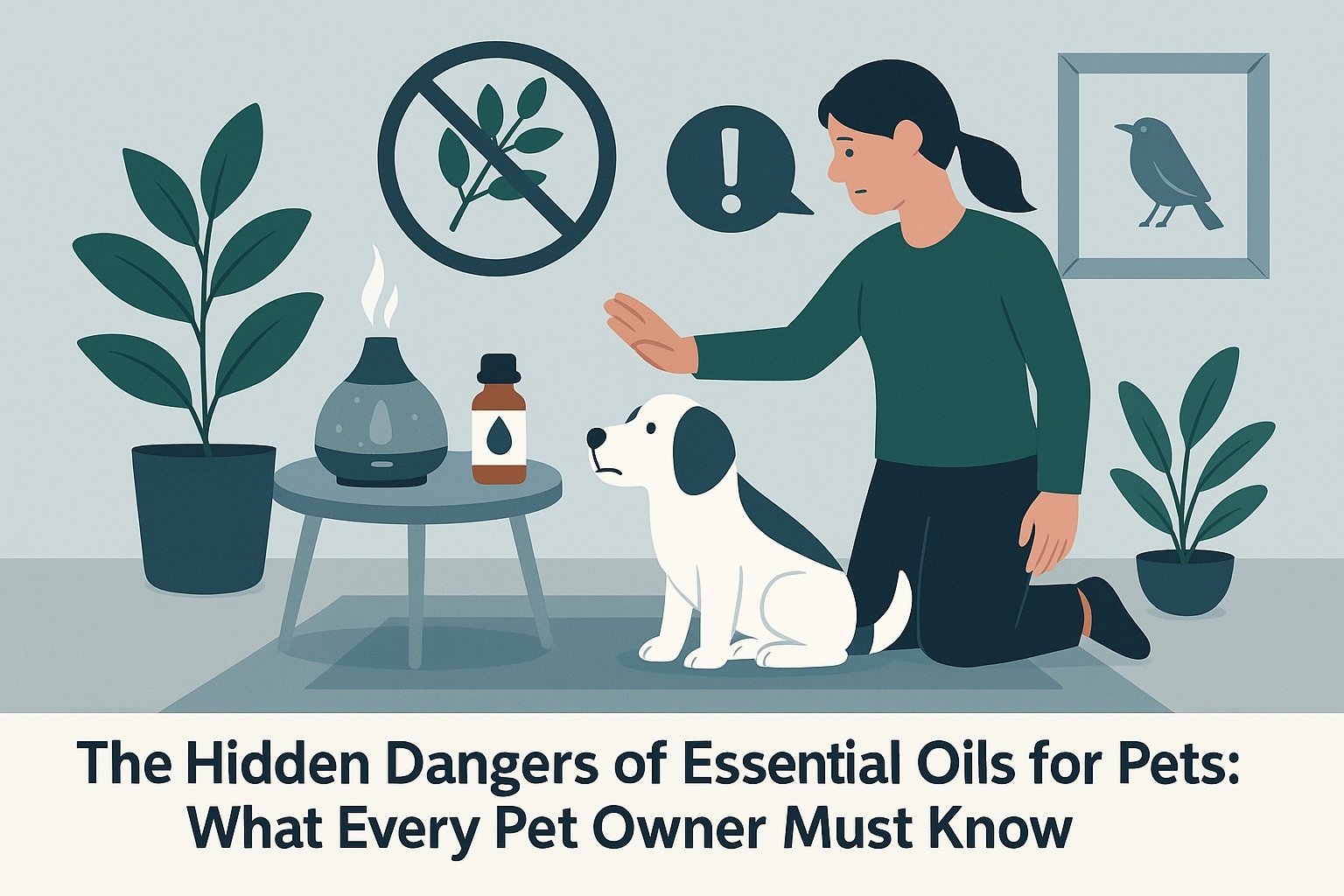
Not all natural scents are safe: A guide to essential oil use around pets
That lavender diffuser creating a calming atmosphere? It could be slowly poisoning your cat. Essential oils—marketed as natural and therapeutic—are metabolic toxins for pets, particularly cats and birds. Their bodies lack the enzymes to process these concentrated plant compounds, leading to toxic buildup even from low-level exposure. Symptoms range from drooling and vomiting to liver failure and death. The danger isn't just diffusers—essential oils hide in "natural" cleaning products, personal care items, and air fresheners throughout your home. Understanding these risks and switching to genuinely pet-safe alternatives can prevent tragedy and keep your companions healthy.
You've just set up your new lavender diffuser, enjoying the calming aroma filling your living room. Your cat walks in, sniffs the air, and retreats to another room. You think nothing of it—cats are particular creatures, after all.
But what you don't see is your cat's liver struggling to process phenolic compounds it has no ability to metabolize. What seems like a harmless wellness choice for you could be slowly poisoning your pet.
Essential oils have become ubiquitous in Toronto homes, marketed as natural solutions for everything from stress relief to household cleaning. The global essential oils market is booming, and wellness influencers promote them as safe, plant-based alternatives to synthetic products.
But there's a dangerous knowledge gap: what's therapeutic for humans can be toxic—even fatal—for pets. Many pet owners never connect their pet's declining health to the products they're using daily.
If you have pets and use essential oils—whether in diffusers, cleaning products, personal care items, or for aromatherapy—you need to understand the risks. This comprehensive guide will explain why essential oils are dangerous for animals, which ones pose the greatest threats, how to recognize toxicity symptoms, and what safer alternatives exist for pet-owning households.
Your pet's health may depend on understanding this information.
Why essential oils are dangerous for pets
The fundamental problem is that pets are not small humans. Their bodies process substances entirely differently, and what's safe for us can be toxic for them.
Metabolic differences
Cats lack crucial liver enzymes:Feline livers don't produce glucuronyl transferase, an enzyme necessary for metabolizing phenolic compounds and terpenes found in many essential oils. Without this enzyme, these compounds accumulate in the cat's system, causing progressive toxicity even from low-level exposure.
Dogs have limited detoxification capacity: While dogs have better metabolic capacity than cats, they're still far more sensitive than humans. Their livers are smaller relative to body weight, and they metabolize substances differently. What might cause mild irritation in a human can overwhelm a dog's system.
Birds have hyper-sensitive respiratory systems: Avian respiratory systems are incredibly efficient—which also makes them incredibly vulnerable. Birds lack a diaphragm and have air sacs throughout their bodies that make their entire system exposed to airborne toxins. This is why canaries were historically used in coal mines—they showed distress from toxic gases before humans did.
Even brief exposure to diffused essential oils can cause respiratory distress in birds. There's essentially no safe level of exposure for most pet birds.
Small mammals face dose-dependent risk: Rabbits, guinea pigs, ferrets, hamsters, and other small pets have tiny body masses and fast metabolisms. A concentration that seems insignificant to a 70kg human is massive to a 1kg rabbit. Their small size means faster absorption and more severe effects.
Reptiles and amphibians are also vulnerable: While less commonly discussed, reptiles and amphibians can suffer from essential oil exposure, particularly through skin absorption (for amphibians) or respiratory exposure (for reptiles). Their unique metabolisms provide no protection.
How essential oils enter your pet's system
Essential oils don't need to be ingested to cause harm. There are multiple exposure routes, many of which pet owners don't consider:
Inhalation (the most common route): When you run a diffuser, you're creating an aerosol of essential oil particles suspended in air. Pets breathing this air absorb compounds through their lungs directly into their bloodstream, bypassing some natural defenses. Cats and birds are particularly vulnerable to this route.
Dermal absorption: Essential oils applied to human skin can transfer to pets through petting. Oils spilled on surfaces where pets walk can be absorbed through paw pads (which have thinner skin than you might think). Direct application to pet fur or skin—sometimes done by well-meaning owners following bad advice—causes rapid absorption.
Ingestion: Pets groom themselves constantly. Any essential oil that lands on their fur gets ingested during grooming. Cats are particularly at risk here due to their meticulous grooming habits. Pets may also ingest oils by licking surfaces where oils have been used or spilled.
Environmental accumulation: Repeated low-level exposure from daily diffuser use, essential oil cleaning products, or oil-based air fresheners causes accumulation. The compounds build up faster than the pet can eliminate them, leading to chronic toxicity.
Concentration matters—And it's often unknown
Most essential oils are highly concentrated. Those concentrations are far beyond anything found in nature.
Pet owners often don't realize how potent these products are. "Just a few drops" in a diffuser might seem minimal, but it's creating an environment where your pet is constantly inhaling concentrated plant compounds their body cannot process.
Making matters worse, unless an essential oil is registered as a Natural Health Product in Canada, it is largely unregulated. For the vast majority of oils sold for aromatherapy or home use, there are no standardized concentration requirements or mandatory purity tests. The bottle might say 'pure lavender,' but without a natural product number (NPN) or third-party lab report, you have no way to verify if it contains synthetic additives, pesticides, or hidden solvents.
The "natural" fallacy
Perhaps the most dangerous misconception is that "natural equals safe." This thinking leads people to use essential oils liberally around pets, assuming plant-based products are automatically harmless.
But toxicity isn't about synthetic vs. natural—it's about chemistry and biology. Many of the most lethal substances known are completely natural: hemlock, death cap mushrooms, botulinum toxin, snake venom. All natural. All deadly.
Essential oils are natural, yes. They're also concentrated chemical compounds that evolved in plants as defense mechanisms against insects and herbivores. Their purpose is literally to deter or harm creatures that threaten the plant. Your pet's body recognizes them as the toxins they are.
Common symptoms of essential oil toxicity in pets
Recognizing toxicity symptoms quickly can make the difference between minor illness and tragic outcomes. However, symptoms vary widely depending on the oil, concentration, exposure route, and individual pet sensitivity.
Acute symptoms (immediate to several hours post-exposure)
Respiratory distress:
Difficulty breathing or laboured breathing
Coughing or wheezing
Rapid, shallow breathing
Open-mouth breathing in cats (a sign of severe distress)
Nasal discharge
In birds: tail bobbing with each breath, stretched neck, open beak breathing
Gastrointestinal symptoms:
Drooling or excessive salivation (particularly in cats)
Vomiting
Diarrhea
Lack of appetite
Abdominal pain (indicated by hunched posture, reluctance to move)
Neurological symptoms:
Lethargy or unusual tiredness
Weakness or difficulty walking
Tremors or muscle twitching
Lack of coordination or stumbling
Seizures
Depression or unresponsiveness
Dermal symptoms (from direct contact):
Redness or irritation at application site
Excessive scratching or licking at affected area
Skin burns or chemical burns in severe cases
Hair loss at contact point
Other acute signs:
Excessive pawing at face or mouth
Dilated pupils
Low body temperature
Elevated heart rate
Collapse
Chronic symptoms (from repeated low-level exposure)
Many pet owners never connect chronic health issues to essential oil use because the decline is gradual. Watch for:
Progressive liver damage (particularly in cats):
Jaundice (yellowing of eyes, gums, or skin)
Increased thirst and urination
Weight loss despite normal appetite
Vomiting
Behavior changes
Eventually progressing to liver failure
Respiratory issues:
Chronic coughing
Recurring respiratory infections
Reduced activity tolerance (tiring easily)
Persistent nasal discharge
Behavioral changes:
Avoiding certain rooms (where diffusers run)
Increased hiding behavior
Reduced grooming (feeling unwell)
Aggression or irritability from discomfort
Changes in vocalization patterns
Reduced quality of life indicators:
Decreased appetite over time
Weight loss
Reduced playfulness or interaction
Sleeping more than usual
General malaise
Species-specific warning signs
Cats: Watch for any behavior change, hiding, reduced grooming, excessive drooling, difficulty jumping, or avoiding areas where you use oils. Cats hide illness instinctively, so subtle changes matter.
Dogs: Vomiting, drooling, weakness, and tremors are common early signs. Dogs may also show food aversion or refuse to enter rooms where oils are diffused.
Birds: Any respiratory change is an emergency. Watch for tail bobbing, open-beak breathing, listlessness, loss of voice, regurgitation, or fluffed-up appearance. Birds deteriorate quickly—what looks like mild distress can become fatal within hours.
Small mammals: Lethargy, decreased appetite, laboured breathing, or unusual stillness are concerning. These animals are prey species that hide illness, so any visible symptom represents a serious problem.
When to seek emergency veterinary care
Immediate emergencies (go to an emergency vet right away):
Difficulty breathing or respiratory distress
Seizures or tremors
Collapse or inability to stand
Severe vomiting or diarrhea
Unresponsiveness or extreme lethargy
Known ingestion of essential oils
Any symptom in birds (they decline rapidly)
Urgent care (contact vet as soon as possible):
Persistent vomiting or diarrhea
Excessive drooling
Lack of appetite for more than 12 hours
Weakness or difficulty walking
Unusual behavior changes
Any other symptom that concerns you—trust your instincts
For reference: Keep the Pet Poison Helpline number readily available: 1-800-213-6680 (available 24/7, fees apply). In Toronto, emergency veterinary hospitals include Toronto Veterinary Emergency Hospital, Veterinary Emergency Clinic, and others.
Don't wait to see if symptoms resolve. With essential oil toxicity, early intervention dramatically improves outcomes.
Essential oils that are particularly harmful to pets
While virtually all essential oils pose some risk, certain ones are especially toxic and should be completely avoided in homes with pets.
The most dangerous essential oils
Tea tree oil (Melaleuca): Perhaps the most commonly implicated in pet poisonings. Even small amounts cause severe toxicity in both cats and dogs. Symptoms include muscle tremors, weakness, difficulty walking, hypothermia, and depression. Cats are particularly vulnerable—as little as 7-8 drops can be fatal. Tea tree oil is commonly found in cleaning products, shampoos, skin treatments, and diffuser blends, making accidental exposure common.
Eucalyptus oil: Highly toxic to cats and dangerous to dogs and birds. Causes drooling, vomiting, diarrhea, weakness, and breathing difficulties. Particularly dangerous because it's commonly used in cleaning products, cold remedies, and aromatherapy, meaning pets encounter it frequently.
Citrus oils (lemon, orange, lime, grapefruit, bergamot): Contain d-limonene and linalool, both toxic to cats and dogs. Cause gastrointestinal upset, central nervous system depression, skin irritation, and potential liver damage with chronic exposure. The appealing scent leads many people to use these oils liberally, increasing risk.
Peppermint and spearmint oils: Contain menthol and pulegone, which cause vomiting, diarrhea, nervous system issues, and liver damage. Particularly problematic because these oils are popular for cleaning and air freshening, creating constant low-level exposure.
Pine oil: Frequently found in cleaning products, especially those marketed as "natural" or "forest fresh." Causes liver damage, kidney damage, respiratory irritation, and central nervous system depression. The widespread use in household cleaners makes this a hidden danger.
Pennyroyal oil: Extremely toxic. Even small amounts cause liver failure and can be fatal. Sometimes used in flea repellent products—never use these on or around pets.
Wintergreen oil: Contains high concentrations of methyl salicylate (similar to aspirin). Causes severe gastrointestinal upset, respiratory failure, and can be fatal. As little as one teaspoon can kill a cat.
Ylang ylang oil: Causes breathing difficulty, weakness, and central nervous system depression in both cats and dogs. Sometimes used in calming blends, ironically causing distress in pets.
Oils that are commonly thought "safe" but still risky
Lavender oil: Often promoted as pet-friendly, but this is misleading. While less immediately toxic than tea tree or eucalyptus, lavender still contains linalool and linalyl acetate, which cats metabolize very slowly. Chronic exposure causes toxicity, particularly liver stress. In dogs, large amounts cause depression and digestive upset. For birds, any exposure to diffused lavender is dangerous.
Chamomile oil: Contains coumarins and other compounds that can cause contact dermatitis, digestive upset, and allergic reactions. Less acutely toxic than some oils, but not safe for regular use around pets.
Cedarwood oil: Can cause vomiting, changes in heart rate, and skin irritation. Sometimes used in natural flea products, but poses toxicity risk with regular use.
Clove oil: Contains eugenol, which is toxic to pets at relatively low concentrations. Causes liver damage, respiratory distress, and nervous system issues.
Why "pet-safe" essential oil marketing is misleading
Many companies market essential oil products as "pet-safe" or "pet-friendly." This is often irresponsible marketing that prioritizes sales over safety. Here's what you need to know:
There are no truly safe essential oils for cats: Due to their metabolic deficiency, cats cannot safely process essential oils. There is no "safe" option for regular exposure—only oils that cause acute toxicity more slowly. Saying an oil is "safe for cats" is like saying a food is "safe for someone with severe allergies" because it takes longer to cause anaphylaxis.
"Less toxic" doesn't mean "safe": Some oils are less immediately dangerous, but chronic exposure still causes problems. Marketing them as "safe" ignores cumulative toxicity.
Dilution doesn't eliminate risk: While dilution reduces immediate toxicity risk, it doesn't eliminate the fundamental problem that pets cannot metabolize these compounds. Diluted oils in diffusers still create inhalable exposure.
Hydrosols aren't necessarily safe either: Hydrosols (floral waters from essential oil production) are less concentrated, but they still contain aromatic compounds that can affect pets, particularly with regular exposure. They're somewhat safer than pure essential oils, but not risk-free.
Hidden sources of essential oil exposure
Many pet owners think they don't use essential oils because they don't have a diffuser. But essential oils are ubiquitous in modern products, creating exposure you might not recognize.
Household cleaning products
"Natural", "green", or DIY cleaners: Products and recipes marketed as eco-friendly or natural often contain essential oils as fragrances or active ingredients. Labels might list "plant-based ingredients" or specific oils like pine, citrus, or tea tree.
All-purpose cleaners: Many brands add essential oils for scent and antimicrobial properties. Your pet walks on floors cleaned with these products, then grooms their paws.
Dish soaps: Some eco-friendly dish soaps contain essential oils. Residue on dishes can be licked by pets, or they may lick cleaned surfaces.
Laundry detergents and fabric softeners: Essential oils in laundry products transfer to pet bedding, blankets, and any fabrics your pet contacts. Cats sleeping on lavender-scented bedding are continuously exposed.
Wood cleaners and polishes: Often contain citrus or pine oils. Pets walking on treated floors absorb oils through paw pads.
Personal care and wellness products
Lotions, creams, and body oils: Essential oils in products you apply to your skin transfer to your pet when you pet them. This is a significant exposure route for cats who groom after contact.
Shampoos and soaps: Residue on your skin transfers to pets. Some people also use essential oil soaps to wash their pets—a dangerous practice.
Massage oils: If you use essential oil blends for massage and then interact with pets, you're creating exposure through contact.
Bath products: Essential oils in bath salts, bubble bath, or bath oils create airborne exposure as they evaporate, affecting pets in nearby areas.
Air quality products
Diffusers: The obvious source, but worth emphasizing. Ultrasonic, nebulizing, heat-based, and evaporative diffusers all create inhalable essential oil particles.
Air fresheners: Many plug-in air fresheners, sprays, and automatic dispensers use essential oils or essential oil compounds as active ingredients.
Scented candles: Some contain essential oils that are released when burned. Even if not pure essential oils, many contain synthetic versions of the same compounds.
Potpourri and sachets: Both dried and oil-based potpourri releases aromatic compounds. Pets may also directly chew on or ingest these items.
Reed diffusers: These continuously release essential oils into the air through passive evaporation.
Car air fresheners: If you transport your pet in a vehicle with essential oil air fresheners, they're being exposed in a confined space.
Pest control products
"Natural" flea and tick treatments: Many contain essential oils like cedarwood, peppermint, or citronella. While marketed as safer alternatives to chemical pesticides, they can cause toxicity, especially with regular application.
Rodent and insect repellents: Natural pest control products often use essential oils like peppermint or citronella. These create exposure for household pets.
Other surprising sources
Yoga mats and props: Some are treated with or made from materials containing tea tree or eucalyptus oil for antimicrobial properties.
Craft supplies: Soap-making supplies, candle-making materials, and potpourri ingredients contain concentrated essential oils pets might access.
Aromatherapy jewelry: Lockets and bracelets that hold essential oils for personal aromatherapy can be dangerous if pets chew on them or if oils transfer through contact.
Essential oil diffusing jewelry for pets: These products are marketed directly for pets and are particularly dangerous. Never use them.
Reading labels for hidden essential oils
Look for these ingredients on labels:
Specific oil names (lavender oil, tea tree oil, etc.)
"Plant-based fragrance" or "botanical fragrance"
"Natural fragrance" (often code for essential oils)
"Essential oil blend"
Scientific names of plants (Melaleuca alternifolia = tea tree)
Terms like "aromatherapy formula"
When in doubt, contact the manufacturer to ask specifically about essential oil content. If they can't or won't answer clearly, avoid using the product around pets.
Steps to prevent accidental exposure
Creating a safe home for pets doesn't mean you need to eliminate every scent or never clean. It means being intentional about products and understanding risk management.
Eliminate or minimize direct essential oil use
Stop using diffusers entirely: This is the single most important step. Diffusers create constant, inescapable exposure. If you must use aromatherapy, restrict it to a room pets never access, run it for very short periods (15-30 minutes maximum), ventilate thoroughly afterward, and ensure pets can't enter for several hours after use.
Never apply essential oils to or near pets: No matter what social media, wellness bloggers, or even some poorly informed sources suggest, never apply essential oils to your pet's skin, fur, collar, bedding, or toys. This includes "diluted" applications.
Store essential oils securely: If you keep essential oils in your home, store them in locked cabinets that pets cannot access. Treat them like medication—locked away and out of reach. Remember that pets can open cabinets, knock over bottles, and are persistent when curious.
Handle spills as emergencies: If you spill essential oils, treat it as a contamination event:
Remove pets from the area immediately
Ventilate heavily (open windows, use fans)
For hard surfaces: absorb with paper towels or corn starch, then clean thoroughly with dish soap and water
For carpets or fabric: blot (don't rub) with clean dry cloths, then use baking soda to absorb remaining oils before vacuuming
Keep pets away from the area for at least several hours or until the scent is completely gone
Switch to pet-safe cleaning and personal care products
Use fragrance-free products when possible: Unscented cleaners, detergents, and personal care products eliminate essential oil exposure entirely. Many effective cleaning products contain no fragrances.
Read labels carefully: Become vigilant about checking ingredient lists. Avoid products listing essential oils, even in "natural" or "eco-friendly" brands.
Make your own simple cleaners: Basic cleaning solutions using vinegar (diluted properly for appropriate surfaces), baking soda, and unscented dish soap effectively handle most household cleaning without essential oil risks. Note: vinegar is safe around pets when used properly for cleaning—the issue is applying it to acid-sensitive surfaces, not pet safety.
Choose truly pet-safe commercial cleaners: Some brands specifically formulate products to be safe around pets. Look for certifications from veterinary organizations when available.
Check EcoLogo or Green Seal certifications: While these don't guarantee essential oil-free formulas, certified products generally list ingredients transparently, making it easier to identify and avoid essential oils.
Create essential oil-free zones
If you absolutely must use essential oils for personal use, designate specific areas:
Keep oils confined to one room: Use essential oils only in a bathroom or bedroom where pets are completely excluded. Ensure the door seals well.
Ventilate before allowing pet access: After using essential oils, ventilate the space for several hours before allowing pets to enter. The scent being gone to your nose doesn't mean it's safe—pets detect concentrations far below our threshold.
Wash hands thoroughly: After handling essential oils or using products containing them, wash your hands thoroughly with soap before touching your pets or their belongings.
Change clothing: If you've been in an environment with heavy essential oil use (like a yoga class using aromatherapy), change clothes before interacting with pets to avoid transferring oils through fabric contact.
Be cautious with guests and service providers
Inform visitors: Let guests know you don't use essential oils around your pets, and ask them not to bring essential oil products into your home or apply them before visiting.
Vet your house cleaners: If you hire cleaning services, explicitly ask about their products. Many cleaning companies use essential oils in their supplies. Provide your own pet-safe products or choose services that specifically cater to pet-owning households.
Check grooming and boarding facilities: If you board your pet or use grooming services, ask what products they use. Some facilities use essential oil diffusers or essential oil-based shampoos. Find providers who understand and respect pet safety concerns.
Monitor your pet's environment
Ensure escape routes: If essential oils are in use anywhere in your home (even temporarily), ensure pets can freely move to other areas. Never diffuse oils in a room where a pet is confined.
Watch for behavior changes: If your pet starts avoiding certain rooms, seems reluctant to enter areas they previously enjoyed, or shows any behavior changes, consider whether essential oils might be the cause.
Provide fresh air access: Ensure pets always have access to well-ventilated areas or rooms where no essential oils are used.
Educate family members and roommates
Everyone in your household needs to understand the risks:
No diffusing essential oils in shared spaces
No using essential oil products on themselves before interacting with pets
No giving pets access to essential oils or products containing them
What symptoms to watch for in case of exposure
Children especially need clear rules, as they might not understand why their lavender lotion or peppermint lip balm is dangerous for the cat.
What to do if your pet is exposed to essential oils
Despite precautions, accidents happen. Knowing how to respond can significantly improve outcomes.
Immediate response steps
1. Remove your pet from exposure source immediately
If a diffuser is running, turn it off and move your pet to fresh air
If oils are on their skin or fur, address that next
If they've ingested oils, don't give them anything by mouth without veterinary guidance
2. If essential oils are on your pet's skin or fur:
Do not use water alone; oil and water don't mix, and rinsing with only water will simply spread the oil across more of your pet's skin, increasing the area of absorption.
Use a mild, unscented, grease-cutting dish soap to break down the oils
Gently work the soap into the affected area without adding water initially
Once the soap has emulsified the oils, rinse thoroughly with lukewarm water
Pat dry with clean towels
This is especially important for cats, who will groom and ingest oils if not removed
3. Contact your veterinarian immediately
Call even if symptoms seem mild—toxicity can progress quickly
Provide specific information: which essential oil, how much, route of exposure (inhaled, skin contact, ingested), when exposure occurred, and current symptoms
If your regular vet isn't available, contact an emergency veterinary clinic
4. Call the Pet Poison Helpline if needed: 1-800-213-6680
Available 24/7
Staffed by veterinary toxicologists
They provide specific treatment recommendations based on the exact exposure
They can also consult with your veterinarian for optimal care
Fees apply and are stated on their homepage, but the consultation can be lifesaving
5. Bring the essential oil bottle to the vet
The specific oil and brand helps veterinarians determine treatment
If you used a blend, bring that as well
If the exposure was from a product (cleaner, lotion), bring the container with ingredient list
What NOT to do
Don't induce vomiting unless specifically instructed: Essential oils can cause additional damage coming back up, and aspiration into lungs is extremely dangerous. Only induce vomiting if a veterinary professional specifically instructs you to do so.
Don't give milk or food: This old remedy can actually speed absorption of some substances. Wait for veterinary guidance.
Don't use home remedies: Internet advice about activated charcoal, coconut oil, or other home treatments can make things worse. Follow professional veterinary advice only.
Don't delay seeking care: "Wait and see" can mean the difference between successful treatment and tragedy, especially with cats and birds who deteriorate rapidly.
Don't assume they're fine because symptoms are mild: Essential oil toxicity often presents with mild symptoms initially, then progresses hours later. Early intervention prevents progression.
What to expect at the veterinary clinic
Treatment depends on exposure type and severity but may include:
Decontamination: Bathing to remove oils from skin/fur, or drugs to safely empty the stomach if ingestion was recent.
Supportive care: IV fluids to help flush toxins, temperature regulation, oxygen support for respiratory distress.
Liver support: Medications to support liver function, especially critical for cats. This might include SAMe, silymarin (milk thistle), or other hepatoprotective drugs.
Symptomatic treatment: Anti-nausea medications, anti-seizure drugs if needed, pain management.
Monitoring: Blood work to assess liver and kidney function, observation period to watch for delayed symptoms.
Hospitalization: Moderate to severe cases often require 24-48 hours of hospital care for monitoring and intensive treatment.
Follow-up care
Even after initial treatment:
Follow all veterinary instructions for at-home care and medication
Attend all recommended follow-up appointments
Monitor for recurring or worsening symptoms
Have liver function rechecked as recommended (especially important for cats)
Completely eliminate the source of exposure to prevent recurrence
Prevention after an incident
An exposure incident should be a wake-up call to completely audit your home:
Remove all essential oil products
Check all cleaning supplies, personal care items, air fresheners
Replace anything containing essential oils with pet-safe alternatives
Inform all household members about what happened and new protocols
Pet-safe alternatives for aromatherapy, cleaning, and air freshening
You don't have to sacrifice a clean, pleasant-smelling home to keep your pets safe. Many effective alternatives exist.
For aromatherapy and relaxation
Explore other relaxation methods:
Meditation apps without aromatherapy components
Music or white noise
Weighted blankets
Herbal teas (for your consumption, not aromatherapy)
Massage without essential oils
Stress-reduction techniques like deep breathing
If you must use aromatherapy: Restrict it to times when pets are out of the house (at a boarder, at the park, etc.), ventilate thoroughly before their return, and ensure no residual scent remains.
For air freshening
Baking soda: Simple but effective. Place open boxes in areas needing odour absorption—litter box areas, near garbage cans, in closets. Replace regularly.
White vinegar: Absorbs odours without leaving a strong scent. Place bowls of vinegar in rooms overnight to remove odours. The vinegar smell dissipates as it dries, taking other odours with it.
Activated charcoal: Excellent for odour absorption. Available in bags designed for closets, refrigerators, and rooms. Completely pet-safe.
Fresh air: Open windows regularly for ventilation. This is the healthiest air freshening method for everyone, including pets.
HEPA air purifiers: Remove odours, allergens, and particulates without adding any chemicals or scents to the air. Choose models without ionizers or ozone generation.
Houseplants (pet-safe varieties): Many plants naturally filter air and add freshness. Ensure you choose non-toxic varieties: spider plants, Boston ferns, African violets, and certain palms are safe for most pets. Avoid toxic plants like lilies (extremely toxic to cats), pothos, philodendron, and many others.
Pet-safe commercial air fresheners: Some brands specifically formulate odour eliminators without essential oils or harmful chemicals. Look for enzyme-based odour eliminators or products specifically labeled safe for use around pets.
For cleaning
Unscented commercial cleaners: Many effective cleaning products contain no fragrances at all. These work just as well as scented versions.
DIY cleaning solutions:
Glass cleaner: Vinegar and water solution
Floor cleaner: Appropriate pH-balanced cleaner for your floor type (many are unscented)
Bathroom cleaner: Baking soda paste for scrubbing, vinegar for mineral deposits
All-purpose cleaner: Dish soap and water for most surfaces
Steam cleaning: Steam cleaning uses only heat and water to sanitize and clean surfaces, making it completely pet-safe for appropriate applications.
Professional pet-safe cleaning services: Some cleaning companies (myself included) specifically formulate their approach to be completely safe for pets, avoiding essential oils and other harmful ingredients.
For laundry
Fragrance-free detergent: Many brands offer completely unscented options that clean effectively without any added fragrances.
Skip fabric softener: Often contains fragrances (including essential oils). Use 1/2 cup of white vinegar in the rinse cycle instead—it softens fabrics naturally and the scent dissipates completely during drying.
Wool dryer balls: Replace scented dryer sheets with unscented wool dryer balls to reduce static and soften clothes without any chemical additives.
For pest control
Professional pest control: Consult professional exterminators who use pet-safe methods. Many modern pest control approaches are very pet-friendly.
Physical barriers: Seal entry points, use screens, fix cracks and gaps to prevent pest entry without chemical intervention.
Diatomaceous earth (food-grade): For certain pests like fleas, food-grade diatomaceous earth is mechanical rather than chemical and pet-safe when used properly. Diatomaceous earth can irritate the lungs, so consult your vet before use.
Veterinarian-approved flea and tick prevention: Modern flea and tick medications from your vet are safe and effective. Avoid "natural" products containing essential oils—they're less effective and potentially harmful.
For personal care
Fragrance-free personal products: Choose unscented lotions, soaps, shampoos, and other personal care items. These work just as well and eliminate transfer risk to your pets.
If you use scented products: Apply them, wash your hands thoroughly with soap, and wait at least 30-60 minutes (or until the smell is completely gone from your hands) before close pet contact to allow for full absorption/evaporation.
Special considerations for different types of pets
While the general principles apply across species, different pets have specific vulnerabilities worth understanding.
Cats: Very vulnerable
Why cats are very high risk:
Lack critical liver enzymes
Meticulous groomers (anything on their fur gets ingested)
Curious and agile (access to high shelves, counters)
Hide illness until it's severe
Small body size means even tiny amounts have major impact
Cat-specific precautions:
Zero tolerance approach—avoid all essential oils in homes with cats
Be especially vigilant about products you apply to yourself that cats might come into contact with
Watch for any behavior changes—hiding, reduced grooming, lethargy
Dogs: Variable risk based on size and exposure
Why dogs face risk:
Curious nature leads to investigation of novel scents and products
Varying sizes create dose-dependent risk (small dogs are higher risk)
Some breeds have underlying conditions affecting metabolism
May deliberately consume products if they find them accessible
Dog-specific precautions:
Small dogs (under 10kg) face higher risk—treat with cat-level caution
Watch for drooling as an early warning sign
Secure essential oil bottles—dogs can chew through containers
Be cautious with topical products marketed for dogs—check ingredients carefully
Monitor for behavioral avoidance of rooms or areas
Birds: Extremely vulnerable
Why birds are critically vulnerable:
Unique respiratory system with air sacs throughout the body
No diaphragm—their entire body cavity is exposed to air
Extremely efficient gas exchange means rapid absorption of airborne toxins
Small body size and fast metabolism
Excellent at hiding illness until they're critically ill
Bird-specific precautions:
Never use diffusers in homes with birds—even in other rooms
Avoid all aerosol products and air fresheners
Be cautious with personal care products—birds can be affected by what's on your hands when handling them
Ensure excellent ventilation always
Any respiratory symptom is an emergency—birds decline rapidly
Consider that candles, non-stick cookware fumes, and cleaning product fumes are also dangerous
If you must use any scented product, remove birds from the home entirely during use and ventilate for 24+ hours before returning them
Small mammals: Size-dependent risk
Rabbits, guinea pigs, ferrets, hamsters, mice, rats, chinchillas:
Why small mammals face risk:
Tiny body mass means very low threshold for toxicity
Fast metabolism processes substances quickly but also reaches toxic levels faster
Limited research on many species makes safe exposure levels unknown
Prey animals hide illness instinctively
Small mammal precautions:
Treat with similar caution as cats—avoid essential oils entirely
Never use essential oil-based bedding or cage products
Ensure ventilation in their housing area
Watch for respiratory issues—these are often the first sign
Have an exotic vet who knows your specific species
Reptiles and amphibians: Often overlooked
Why reptiles and amphibians are also at risk from essential oils:
Reptiles have different metabolic pathways—toxicity information is limited
Amphibians absorb substances directly through permeable skin
Both have specific temperature and humidity requirements that can concentrate airborne substances
Limited research means safe levels aren't established
Reptile and amphibian precautions:
Never use essential oils in products that contact enclosures or animals
Be cautious with room fresheners—enclosed tanks can concentrate airborne substances
Amphibians are especially vulnerable through skin absorption—use extreme caution with any products near their environment
Find an exotic vet familiar with your species for advice
Multi-pet households: Protecting the most vulnerable
If you have multiple types of pets, your safety standards must accommodate the most vulnerable species. For example:
A home with both dogs and cats should follow cat protocols
A home with birds should have zero tolerance for any airborne substances
Don't assume that because your dog seems fine, your cat is also fine—cats may be silently developing toxicity
Regulations, resources, and veterinary guidance
Toronto and other Canadian pet owners have specific resources and considerations for navigating essential oil safety.
Limited regulation of essential oils in Canada
Health Canada regulations: Essential oils fall into a grey area of regulation. When marketed for therapeutic purposes, they may be regulated as Natural Health Products (NHPs) and require licensing. However, many essential oils are sold for aromatherapy or as cosmetic ingredients, which have less stringent oversight.
No pet safety requirements: Products containing essential oils aren't required to carry pet safety warnings, even when those products are commonly used in homes with pets. This means the burden of research falls entirely on consumers.
Lack of standardization: Essential oil purity, concentration, and sourcing aren't standardized. You can't reliably know exactly what you're getting or how strong it is.
Canadian veterinary resources
Canadian Veterinary Medical Association (CVMA): Provides resources on household toxins and pet safety. Their website includes information on toxic substances, though specific essential oil guidance is limited. They can help you find veterinarians in your area.
Ontario Veterinary Medical Association (OVMA): For Ontario residents, provides resources and vet finder tools. Many provincial associations have similar resources.
Pet Poison Helpline: While U.S.-based, this 24/7 resource serves Canadian pet owners. The number again: 1-800-213-6680. Consultation fees apply but can be lifesaving.
Local emergency veterinary hospitals: Toronto has several 24-hour emergency veterinary facilities:
Keep emergency contact information readily accessible—in your phone, on your refrigerator, saved in your car.
Finding pet-informed professionals
Ask your veterinarian: Your vet is your best resource for pet-specific advice. Ask them:
Which household products are safe for your specific pet
What symptoms to watch for
What to do in case of exposure
Whether your pet has any underlying conditions that create additional vulnerability
Choose cleaning services carefully: When hiring household cleaning services, ask explicitly about their products. I personally avoid essential oils in all of my formulations because I know many of my clients have pets. Disclosure of product use should be standard, but it isn't—ask every time.
Vet grooming products: Whether you groom at home or use professional services, check every product. "Natural" grooming products often contain essential oils. Choose fragrance-free options or those specifically vetted by your veterinarian.
Research boarding and daycare facilities: If you board your pet or use daycare, ask what products they use in their facilities. Essential oil diffusers in boarding facilities put vulnerable pets at constant risk.
Growing awareness in Canada
Canadian pet owners are increasingly aware of household toxins, but essential oils remain under-recognized as dangers. Veterinary organizations are beginning to emphasize this, but public awareness lags behind the science.
You can help by:
Sharing accurate information with other pet owners
Asking pet-related businesses about their essential oil policies
Supporting companies that prioritize pet safety
Requesting clearer labeling and pet safety warnings on products
Conclusion: Your pet's safety is in your hands
Essential oils are marketed as natural, therapeutic, and safe. For humans, with proper use, they might be. For pets, they're toxic substances that their bodies cannot process safely.
This isn't about judging anyone who's used essential oils around pets unknowingly. Most pet owners who've done so genuinely didn't know the risks—the information isn't prominently shared, and marketing actively downplays dangers while emphasizing benefits.
But now you know. And with that knowledge comes responsibility and power.
The responsibility: To protect your pet by eliminating or strictly controlling essential oil exposure in your home. To read labels, ask questions, and make informed choices. To spread this information to other pet owners who may not know.
The power: To make choices that keep your pets healthy and safe. To demand better labeling and more responsible marketing. To support businesses that prioritize pet safety. To advocate for clearer regulations.
Your pets depend on you to keep them safe from threats they can't understand or avoid. That seemingly harmless lavender diffuser, the natural-scented floor cleaner, the peppermint oil you apply to your temples—these are dangers they can't recognize or escape without your intervention.
The good news: creating a pet-safe home doesn't require sacrifice. You can have a clean, fresh-smelling space using alternatives that work just as well without the risk. You can find relaxation and wellness through methods that don't endanger your companions. The solutions exist—it's just about making informed choices.
If you take away nothing else from this article, remember these critical points:
Essential oils are toxic to pets, particularly cats and birds, because their bodies cannot metabolize these concentrated compounds.
There are no truly "safe" essential oils for regular pet exposure—some are just less immediately toxic than others.
Exposure happens through multiple routes: inhalation (diffusers), skin contact (transfer from your hands or treated surfaces), and ingestion (grooming, licking surfaces).
Even "natural" and "eco-friendly" products often contain essential oils—read every label carefully.
Symptoms can be delayed and progress rapidly—seek veterinary care immediately if you suspect exposure.
Effective alternatives exist for every use case—cleaning, air freshening, aromatherapy, and personal care can all be done safely.
Your pets give you unconditional love, companionship, and trust. They trust you to keep them safe from dangers they cannot understand. Honouring that trust means making informed choices about what products you bring into your shared home.
Your pet's safety starts with your choices. Choose wisely, choose safely, and choose products and services that respect the trust your pets place in you.
Have pets and need professional cleaning you can trust? EcoEthical Cleaning serves Toronto's Harbourfront District and surrounding areas with completely pet-safe products and methods. No essential oils. No harmful chemicals. Just effective, safe cleaning for homes with furry, feathered, and scaled family members. Contact me for a free, no-obligation estimate.
Sources & further reading
“Considerations When Using Essential Oils With Dogs”, American Kennel Club
“The Essentials of Essential Oils Around Pets”, ASPCA
"Toxicoses From Essential Oils in Animals", MSD Veterinary Manual
“Essential Oils and Cats”, Pet Poison Helpline
“Concentrated tea tree oil toxicosis in dogs and cats”, Safdar A. Khan DVM, PhD, Mary Kay McLean MS, and Margaret R. Slater DVM, PhD