
How to care for precious metal objects & surfaces in your home sustainably
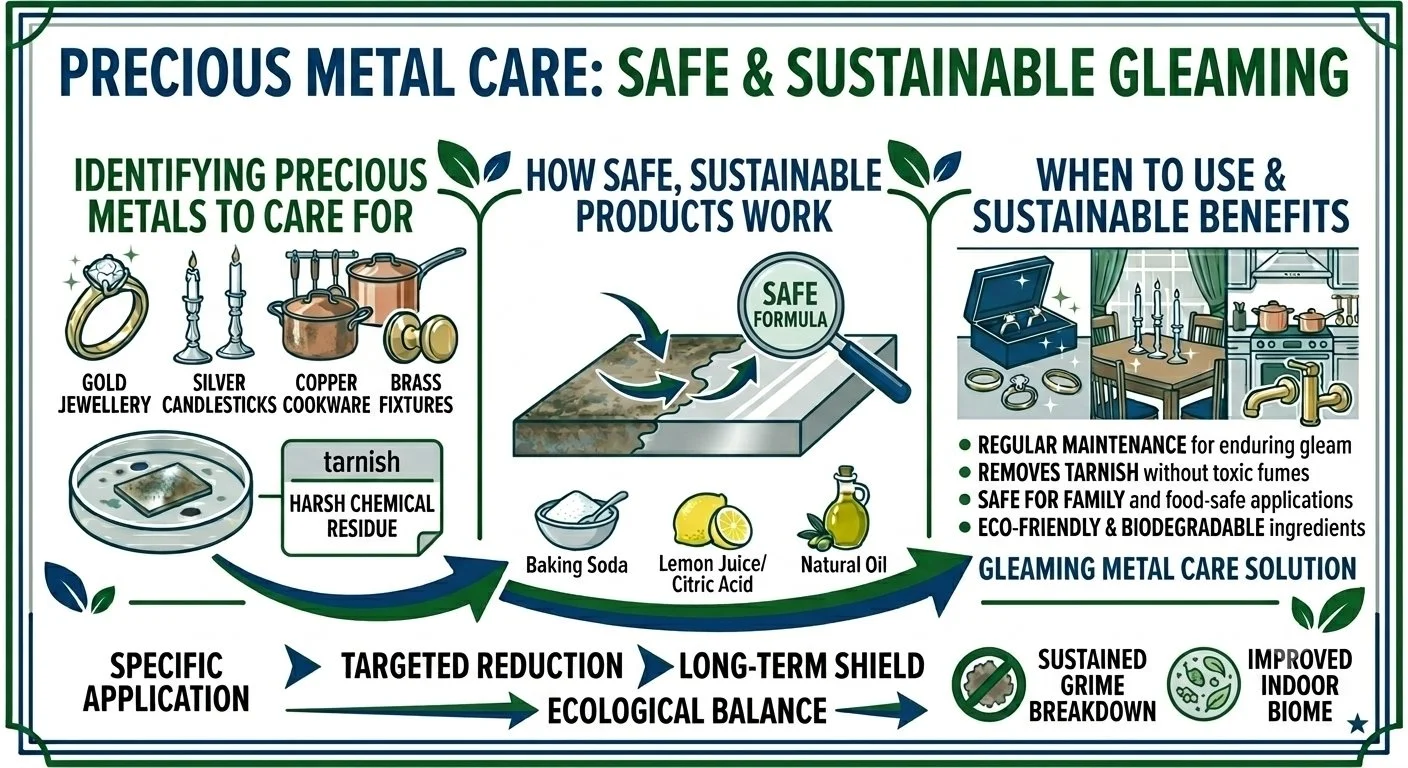
Your gold jewellery, silver candlesticks, copper cookware, and brass fixtures deserve proper care–but most commercial metal polishes are loaded with harsh chemicals. Here's how you can keep precious metal surfaces gleaming using safe, sustainable products that won't harm your family or the environment.
If you've ever reached for a bottle of commercial silver polish and stopped to read the ingredients label, you may have put it right back on the shelf. Many conventional metal cleaners contain ammonia, phosphates, and synthetic compounds that are hard on skin, harsh on the environment, and when rinsed down the drain contribute to water pollution.
The good news is that you don't need any of that. Whether you're maintaining antique silverware passed down through your family, keeping copper cookware in your kitchen gleaming, or preserving the brass hardware on your condo door, there are effective, gentle, and planet-friendly ways to get the job done.
This guide covers everything you need to know about caring for common precious and decorative metals — gold, silver, copper, and brass — using sustainable products and methods that are safe for your household and the environment.
Why your choice of metal cleaner matters
Precious and decorative metals are porous and reactive. That means the products you use to clean them don't just sit on the surface – they interact with the metal at a chemical level. Harsh commercial polishes can accelerate oxidation over time, leave behind residues that dull the finish, or strip protective patinas that actually help preserve older pieces.
Beyond the objects themselves, there's the question of what happens after cleaning. When chemical-laden rinse water makes its way into the sewer system, it can affect local waterways, including Lake Ontario, which serves as the source of drinking water for millions of people in the Greater Toronto Area.
Choosing sustainable, biodegradable cleaning products isn't just an ethical preference – it's a practical one. Natural cleaning agents tend to be gentler on metals, are safer for households with children or pets, and are far less likely to cause the kind of surface damage that leads to costly repairs or replacements down the road.
Caring for gold
What to know
Pure gold (24 karat) is highly resistant to tarnish, but most gold objects in your home are alloyed with other metals like copper or silver to increase their durability. It's these alloys that can tarnish or dull over time, not the gold itself.
What to use
The safest and most effective sustainable method for cleaning gold at home is a simple warm water soak with a small amount of plant-based dish soap. Add a few drops to a bowl of warm (not hot) water, submerge the gold piece for 10–15 minutes, then gently scrub with a soft natural-bristle brush (a repurposed toothbrush with natural fibres works beautifully) and rinse thoroughly.
What to avoid
Avoid ultrasonic cleaners for pieces with set gemstones, as vibrations can loosen settings. Steer clear of chlorine bleach entirely — it can break down gold alloys and cause permanent discolouration. And despite what you may have read online, toothpaste is too abrasive for regular gold cleaning.
Storing gold
Store gold pieces individually in soft cloth pouches or lined boxes to prevent scratching. Keeping pieces separated also reduces the frequency with which they need to be cleaned.
Caring for silver
What to know
Silver tarnishes as a result of a chemical reaction with sulphur compounds in the air — a process called oxidation. Tarnish appears as a yellowish or dark grey film and is entirely natural. It does not damage the silver itself, but it does affect appearance.
What to use
One of the most effective and surprisingly eco-friendly methods for removing silver tarnish involves items you likely already have at home: baking soda, aluminum foil, and boiling water. Line a baking dish or sink with aluminum foil (shiny side up), lay your silver pieces on top, sprinkle generously with baking soda, and pour boiling water over everything. The electrochemical reaction transfers the tarnish from the silver to the foil – no scrubbing required! Rinse thoroughly and buff dry with a soft, natural cotton or linen cloth.
What to avoid
Commercial dip-style silver polishes work quickly but are among the harshest products available for home metal care. Many contain thiourea, a compound that is toxic to aquatic organisms. Repeated use of dip polishes can also erode the fine details in ornate silverware over time.
Avoid rubber gloves when handling silver, as rubber can actually accelerate tarnishing.
How to store
The best sustainable strategy for silver is prevention. Silverware without wood components is best stored by wrapping in buffered acid-free tissue. Unbleached cotton flannel is a great sustainable alternative that will help protect any wood on your silver pieces. Both options will slow the oxidation process significantly. Silica gel packets placed near silver in display cabinets can also help manage humidity levels and reduce tarnishing–and can be refreshed by adding to a low heat (200 degrees fahrenheit (90 celcius)) for a couple of hours.
Silver cloth can also be used as an extra layer of protection.
Caring for copper
What to know
Copper is one of the most beautiful and functional metals you'll find in a home, appearing in everything from cookware and bakeware to decorative bowls, planters, and architectural accents. Over time, copper develops a green or blue-green patina called verdigris, which – unlike rust – is not structurally damaging and is actually prized in many decorative applications. Whether you want to restore the bright orange-red shine or preserve a natural patina is entirely a matter of preference.
What to use
Important note: Many copper items are lacquered to prevent tarnishing, which can be damaged by acidic cleaning methods and should only be cleaned with soap and water. If unsure, one way to test for lacquered copper is to briefly apply a mild acid to its surface. If it doesn’t change colour, then it is lacquered and the methods described below should not be used to clean it.
The most classic and effective natural copper cleaner is a mixture of salt and either lemon juice or white vinegar. The mild acid in the lemon or vinegar dissolves the copper oxide that causes tarnish, while the salt provides gentle mechanical abrasion.
Apply the mixture with a soft cloth, rub gently in circular motions, rinse thoroughly with warm water, and dry immediately to prevent water spots.
For copper cookware with stubborn spots, a paste of flour, salt, and white vinegar (equal parts) applied and left for 10 minutes before rinsing is particularly effective. Ketchup (yes, really) also works well due to its acetic acid content, and it's a fun option to have on hand.
What to avoid
Never use steel wool or abrasive scrubbing pads on copper, as these will leave permanent scratches. Avoid letting copper cookware soak in water for extended periods, as this can cause surface pitting. And be cautious about cleaning copper with a patina you want to preserve–acids will remove it.
How to store
After cleaning and drying copper thoroughly, apply a very thin coat of beeswax or food-grade mineral oil to create a protective barrier that slows re-oxidation. This is particularly useful for decorative copper pieces that aren't washed regularly.
Caring for brass
What to know
Brass–an alloy of copper and zinc–is common in homes as door hardware, light fixtures, decorative objects, and musical instruments. Like copper, brass tarnishes over time, developing a dark, dull surface layer. It's worth noting that much modern "brass" hardware is actually brass-plated steel or zinc, which responds differently to cleaning than solid brass.
What to use
Unlacquered brass
The same lemon-and-salt or vinegar-and-salt method that works for unlacquered copper is equally effective on solid, unlacquered brass. For a gentler everyday clean, warm water with a small amount of plant-based dish soap and a soft natural-bristle brush is sufficient. For heavily tarnished pieces, a mixture of lemon juice and a cream of tartar – applied, left for a few minutes, then rinsed – produces excellent results.
Lacquered brass
Like copper, many modern brass fixtures are lacquered to protect the finish and slow tarnishing. Lacquered brass should only ever be cleaned with warm water and a soft cloth. Any acidic or abrasive cleaner will damage the lacquer coating and cause uneven tarnishing underneath. If the lacquer on your fixtures is already peeling or damaged, it may be worth having it professionally stripped and either re-lacquered or left as living, unlacquered brass.
What to avoid
Avoid ammonia-based cleaners on brass entirely, as they can cause permanent discolouration. Do not use rough scrubbing pads. And as with copper, always dry brass thoroughly after cleaning to prevent water spotting.
General sustainable tips for all precious metals
A few principles apply across the board when it comes to sustainable metal care at home:
Always dry metals thoroughly after cleaning. Water left on metal surfaces accelerates oxidation and tarnishing.
Use soft, natural-fibre cloths for buffing and drying. Unbleached cotton, linen, and wool felt are all excellent choices that won't scratch or leave synthetic fibre residue.
Wear cotton gloves when handling polished silver and gold pieces. The oils on your hands can leave prints that accelerate tarnishing.
Clean metal objects less frequently but more thoroughly. Over-cleaning, even with gentle methods, causes wear over time. Develop a regular but measured routine.
Look for locally made, certified natural metal polishes when choosing a commercial option. Several Toronto and Ontario-based producers offer beeswax-based and plant-derived products that are effective and environmentally responsible.
Dispose of cleaning solutions responsibly. Even natural cleaning rinse water, particularly from heavy tarnish removal, should be diluted before going down the drain.
What to look for in a sustainable metal cleaning product
If you prefer to purchase a ready-made metal cleaner rather than making your own, here's what to look for on the label:
Plant-derived or mineral-based ingredients with recognisable names
No phosphates, ammonia, sodium hypochlorite (bleach), or synthetic fragrances
Biodegradable formula — look for third-party certification where possible
Recyclable or compostable packaging
Produced by a Canadian or local Ontario company when possible, to reduce transportation emissions
As the founder of EcoEthical Cleaning, I've built my practice around the same principles outlined in this guide — using only thoughtfully chosen, sustainable products that protect both your home and our shared environment here in Toronto. Whether it's the care of precious surfaces or a thorough top-to-bottom clean, every service I provide across the Harbourfront District and surrounding neighbourhoods is fragrance-free, biodegradable, and delivered with attention to the details other cleaners overlook.
If you're ready to experience cleaning that's as conscientious as it is thorough, reach out today for a free, no-obligation estimate.
The environmental impact of microfibre cloths
If you’ve switched to microfibre because it was marketed as a greener option, you’re not alone. Unfortunately, each microfibre wash releases plastic fibres that make their way into our waterways and ecosystems. Before you toss what you own, let’s explore what microfibre is made of, why it’s a problem, and how to move toward genuinely sustainable cleaning materials instead.
If you've been told that microfibre cloths are the sustainable cleaning solution, you're not alone. They've been marketed as reusable, effective, and even "eco-friendly" alternatives to disposable paper towels. And in some ways, they deliver — you can clean with just water, they last for years, and they genuinely work.
But here's the uncomfortable truth that's only recently come to light: microfibre cloths are shedding hundreds of thousands of tiny plastic fibres every time they are washed. These microscopic particles are flowing into our waterways, entering our food chain, and accumulating in ecosystems across the world. The very thing we thought was helping the planet is actually contributing to one of the most pressing environmental challenges we face — microplastic pollution.
Before you toss all your microfibre cloths in despair (please don't, I'll explain what to do with them later on), let's understand what's actually happening, why it matters, and what genuinely sustainable alternatives exist.
What are microfibre cloths?
Despite the natural-sounding name, microfibre is 100% synthetic plastic.
Most microfibre cloths are made from a blend of polyester (derived from petroleum) and polyamide, also known as nylon (another petroleum-based plastic). These materials are woven together to create ultra-fine fibres (typically 1/100th the diameter of a human hair) which gives microfibre its signature soft texture and cleaning ability.
While some microfibre is marketed as being "made from recycled materials," it may sound better but doesn't change the fundamental issue: it's still plastic that will shed more plastic.
Unlike cotton or other natural fibres, microfibres are plastic-based, which means they do not break down naturally in the environment.
How microfibre cloths actually work
Microfibre's cleaning power comes from its unique structure. Those ultra-fine plastic fibres create millions of tiny spaces and edges that:
Trap dirt mechanically — The fibres act like tiny hooks that grab and hold onto dust, dirt, and grime at a microscopic level. This is why you can often clean effectively with just water—the physical structure does most of the work.
Absorb moisture efficiently — The spaces between fibres allow microfibre to absorb up to seven times its weight in liquid.
Create static charge — When dry, microfibre builds up a static charge that attracts and holds dust particles, making it excellent for dusting without sprays.
Split and lift oils — Quality microfibre has "split" fibres with wedge-shaped edges that can penetrate and lift oil-based grime that would normally require soap.
It's not marketing hype, microfibre genuinely outperforms traditional cotton cloths for most cleaning tasks. The problem isn't that it doesn't work. The problem is what happens after you use it.
How microfibre cloths harm the environment
The microplastic pollution crisis
Each time a microfibre cloth is washed, it sheds thousands to hundreds of thousands of tiny synthetic fibres that enter wastewater systems. According to research published in Marine Pollution Bulletin, washing a single load of synthetic fabrics can release up to 700,000 microfibres into the water supply.
These fibres are too small for most wastewater treatment facilities to completely filter out, meaning they flow directly into rivers, lakes, and oceans. A study by Imogen Napper and Richard Thompson found that fabric type and washing conditions significantly affect microfibre release, with some materials shedding far more than others during routine washing.
For Canada, this is a particularly significant problem. The Great Lakes — which provide drinking water to millions of Canadians — are among the most contaminated bodies of water for microplastic pollution. Research by McGill University found that microplastics, including those from textiles, are present in the St. Lawrence River at levels comparable to the world's most polluted oceans.
Once in the water, these plastic fibres don't degrade — they just break down into smaller and smaller pieces, persisting in the environment for centuries.
Harm to marine life and Canada's food chain
Microfibre pollution doesn't just affect water quality; it's devastating to marine life. Small fish, plankton, and other aquatic organisms mistake microplastics for food, ingesting particles that provide no nutrition and can cause physical harm.
A study by Fisheries and Oceans Canada has shown that fish from Canadian waters contain microplastics in their digestive systems, which can lead to malnutrition, reproductive issues, and increased mortality rates.
More concerningly, microplastics bioaccumulate up the food chain. When small organisms ingest microfibres, those plastics travel through larger predators and, eventually, to humans. Since seafood is a dietary staple for many Canadians — particularly in coastal communities — this represents a direct threat to public health.
Research from Environment and Climate Change Canada indicates that microplastics have been found in table salt, drinking water, and even human feces, proving that plastic fibres have fully entered our food system. We're literally consuming the plastic pollution we've created.
Fossil fuel dependence and carbon emissions
Beyond the shedding problem, microfibre cloths contribute to climate change from the moment they're manufactured.
These cloths are derived from petroleum-based products — primarily polyester and nylon — which are made from fossil fuels. The production of these materials is energy-intensive, releasing large amounts of carbon dioxide into the atmosphere. According to Canada's Energy Regulator, the oil and gas sector accounts for a quarter of the nation's greenhouse gas emissions.
By supporting the production and use of synthetic fabrics like microfibre, we're indirectly contributing to Canada's carbon footprint. And unlike natural fibres such as cotton, hemp, or bamboo, microfibres cannot be composted or safely disposed of at the end of their life. They typically end up in landfills or incinerators, both of which contribute to environmental degradation.
Even dry use releases plastic
Microfibre cloths shed fibres even when you're using them dry. When you dust with microfibre, you're releasing plastic particles into the air in your home. These particles settle on surfaces and eventually make their way into indoor dust.
While indoor microplastic exposure is still being studied, researchers have already found microplastics in human lung tissue and blood samples. The full health implications aren't yet understood, but the trajectory isn't encouraging.
Why microfibre cloths aren't as "eco-friendly" as advertised
Many microfibre cloths are marketed as sustainable because they're reusable and reduce the need for paper towels or disposable cleaning products. While it's true that microfibre cloths reduce single-use waste, their overall environmental impact is far more damaging.
Here's why they're not a truly sustainable choice:
Plastic shedding — Each wash releases hundreds of thousands of microplastics into waterways—contributing to the estimated 35% of microplastic pollution in oceans that comes from synthetic textiles.
Non-biodegradability — They don't break down naturally and persist in the environment for centuries, continuing to fragment into smaller particles.
Petroleum-based production — They rely on fossil fuel extraction, contributing to greenhouse gas emissions and global warming.
End-of-life waste — They cannot be easily recycled or composted. Textile recycling infrastructure is limited, and mixed synthetic fabrics like microfibre are particularly difficult to process.
Invisible pollution — Unlike plastic bottles or bags that we can see and measure, microfibre pollution is invisible — which makes it easier to ignore but no less harmful.
Sustainable alternatives to microfibre cloths
The good news is that genuinely sustainable alternatives exist that clean just as effectively without the plastic pollution problem. Natural fibres have been cleaning homes effectively for centuries — we just got distracted by newer technology.
Natural fibre cloths
Cotton huck towels — These lint-free, tightly woven cotton towels are what professional window cleaners used for decades before microfibre existed. They're exceptionally absorbent, leave no streaks on glass, and can be washed hundreds of times.
Best for: Glass, mirrors, stainless steel, general wiping
Organic cotton — Biodegradable, durable, and can be washed repeatedly. Look for GOTS-certified organic cotton, which is free from harmful chemicals and pesticides.
Best for: All-purpose cleaning, kitchen surfaces
Swedish dishcloths — Made from cellulose (wood pulp) and cotton, these biodegradable cloths can absorb 15 times their weight in liquid. When they wear out after months of use, they can be composted.
Best for: Countertops, spills, general kitchen cleaning
Bamboo — A fast-growing, renewable resource that requires less water and no pesticides to grow. Bamboo cloths are naturally antibacterial, highly absorbent, and an excellent alternative to microfibre.
Best for: Bathrooms, kitchen surfaces, general cleaning
Hemp — One of the most sustainable textiles available. It requires minimal water and is naturally resistant to pests, meaning it doesn't rely on chemical treatments. Hemp cleaning cloths are exceptionally durable and biodegradable.
Best for: Heavy-duty cleaning, scrubbing
Linen — Naturally antimicrobial and highly durable, linen becomes softer and more absorbent with each wash. A bit of an investment upfront, but they'll last for years.
Best for: Kitchen surfaces, glassware, fine cleaning
Upcycled cotton rags -- Instead of purchasing new materials, consider using old t-shirts, towels, or linens as cleaning cloths. Not only does this reduce waste, but it also extends the life of existing fabrics. True sustainability isn't just about buying better; it’s about utilizing what already exists.
Best for: General cleaning, any household task
Wool — For dusting specifically, wool cloths naturally attract and trap dust particles through static electricity without synthetic fibres. Wool is compostable and does not release microplastics when washed.
Best for: Dusting furniture, electronics, delicate surfaces
Natural fibre sponges and brushes
For scrubbing tasks, consider:
Cellulose sponges — Made from wood pulp, they're biodegradable and work just as well as synthetic sponges
Coconut fibre scrubbers — Tough enough for stuck-on food without scratching surfaces
Natural bristle brushes — Perfect for grout, tile, and detail cleaning
Making the switch: Practical tips
Start with what you replace most often — If you're constantly reaching for microfibre for glass cleaning, replace those first with cotton huck towels. Test what works for your routine.
Use what you already have — Before buying anything new, repurpose old cotton t-shirts, towels, and linens. Cut them into cleaning-sized squares.
Designate cloths by task — Just like with microfibre, assign specific natural-fibre cloths to specific jobs (bathrooms, kitchen, dusting). This prevents cross-contamination and keeps things organized.
Adjust your technique slightly — Natural fibres work a bit differently than microfibre. You might need to:
Rinse and wring cloths more frequently during use
Use slightly more water for some tasks
Dampen cotton cloths before dusting (rather than using them dry)
Switch to a dry cloth for final buffing on glass
Wash properly — Natural fibres are easier on the environment, but you still want them to last:
Wash in warm or hot water
Avoid fabric softener (it reduces absorbency)
Hang dry when possible to extend their life
No special care needed—they're far more forgiving than synthetic materials
What if you already own microfibre cloths?
Don't throw them away — that just sends more plastic to the landfill immediately. Instead:
Use them until they wear out — The environmental damage from washing them is already happening, but manufacturing new products (whether microfibre or natural alternatives) also has an environmental cost. Get your use out of what you own.
Reduce microplastic shedding when washing them:
Wash in cold water (reduces fibre release)
Use liquid detergent instead of powder (less agitation)
Wash full loads (less friction between items)
Consider a microfibre-catching laundry bag like Guppyfriend or Cora Ball — they can capture many microplastics before they reach waterways
If you use a laundry filter, dispose of captured fibres by placing them in a sealed non-recyclable bag and adding to your household trash
Air dry instead of machine drying when possible
Repurpose for non-washing tasks — Use old microfibre for garage cleaning, car detailing, or other jobs where you won't wash them frequently.
Replace gradually with natural alternatives — As microfibre cloths wear out, replace them with natural fibre options. This spreads out the cost and lets you test what works best for your cleaning routine.
How Canadians can take action
If you're concerned about the environmental impact of microfibre cloths, here are practical steps you can take today:
Switch to sustainable alternatives — Opt for natural fibre cloths instead of microfibre. Even switching half your cleaning cloths makes a difference.
Use a laundry filter — If you must continue using microfibre, consider installing a microfibre filter in your washing machine to capture plastic fibres before they enter wastewater.
Support microplastic research and advocacy — Organizations like Ocean Wise and Oceana Canada are actively working to combat microplastic pollution. Consider supporting their work or staying informed about their initiatives.
Spread awareness — Educate friends and family about the environmental costs of microfibre products. Most people genuinely don't know about this issue. Sharing information facilitates change.
Support businesses making better choices — Choose cleaning services and products that prioritize natural materials over synthetics. Consumer demand drives industry change.
Advocate for better infrastructure — Contact your local representatives about improving wastewater treatment facilities to better filter microplastics, and support policies that address plastic pollution at the source.
Final thoughts: Progress over perfection
Here's the thing about sustainable living: it's complicated, and there's rarely a perfect solution. Microfibre cloths seemed like the right choice when we first learned about them. The fact that we're now discovering they have serious environmental downsides doesn't mean we failed — it just means our understanding evolved, and we're now responding to new information.
The goal isn't to shame anyone for using microfibre or to create anxiety about every cleaning choice. It's to make informed decisions with the information we now have.
Natural fibre cleaning cloths are a genuinely better alternative for the environment. They work beautifully for most cleaning tasks, they're biodegradable, and they don't shed plastic into our water systems. For the vast majority of home cleaning, you truly don't need synthetic materials.
Will switching your cleaning cloths single-handedly save the Great Lakes? No. But microplastic pollution is a massive problem that requires action at every level — from individuals to industries. Your choices do contribute to demand, and demand shapes what manufacturers produce and what becomes normalized.
Plus, there's something quietly satisfying about cleaning with simple, natural materials that humans have used effectively for centuries. Cotton, linen, and cellulose work. They've always worked. We just got enticed by technology that seemed more advanced.
If you're ready to make the switch, start small. Replace one type of cleaning cloth. See how it works. Adjust your routine. Then replace another. Before long, you'll have a cleaning kit that's genuinely sustainable — not just marketed that way.
Every small change helps in the fight against plastic pollution. Are you ready to make the switch?
Need help with sustainable, microfibre-free cleaning solutions for your home? As an independent cleaner and the founder of EcoEthical Cleaning, I understand the science behind every cleaning method and choose approaches that protect both your surfaces and our environment. Contact me for a free, no-obligation estimate and experience professional cleaning that's both effective and responsible. I serve Toronto’s Harbourfront-CityPlace district and surrounding areas.
Sources & further reading
Katie Okamoto, "Your Laundry Sheds Harmful Microfibers. Here's What You Can Do About It," Wirecutter, New York Times, August 5, 2021
Imogen E. Napper, Richard C. Thompson, "Release of synthetic microplastic plastic fibres from domestic washing machines: Effects of fabric type and washing conditions," Marine Pollution Bulletin, ScienceDirect, October 12, 2016
"Provincial and Territorial Energy Profiles," Canada Energy Regulator, September 10, 2024
"Science assessment of plastic pollution," Environment and Climate Change Canada, October 2020
McGill University research on microplastics in the St. Lawrence River
Fisheries and Oceans Canada studies on microplastics in Canadian fish populations
For more information on combating microplastic pollution: